

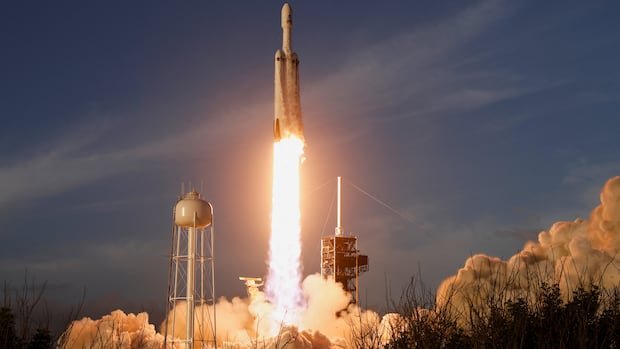

NASA embarked on a fresh endeavor to explore significant puzzles in astrophysics and cosmology by launching the new flagship astronomical observatory, the Nancy Grace Roman Space Telescope, repurposed from a spy satellite. The approximately $4 billion U.S. project was launched from NASA’s Kennedy Space Center in Cape Canaveral, Florida, aboard a SpaceX Falcon Heavy rocket. The telescope’s mission is slated for five years, with the potential for an additional five years based on fuel reserves.
Positioned in orbit beyond the moon, the telescope is primed to delve into cosmic mysteries like dark energy, dark matter, gravity at immense scales, and the quest for exoplanets. Describing the launch as a pivotal moment for scientists, Julie McEnery, the senior project scientist for the Roman telescope, expressed excitement for the journey into the unknown that lies ahead.
Originally intended for a spy satellite program under the National Reconnaissance Office, the telescope was repurposed for cosmic exploration after the program faced budget challenges and was discontinued. The Roman telescope, named after NASA’s first chief astronomer, is set to journey towards Lagrange Point 2, located approximately 1.6 million kilometers from Earth.
With a focus on commissioning and preparing for scientific operations in the next 90 days, mission scientists anticipate Roman to transmit its initial high-resolution images before the upcoming winter holidays. NASA Administrator Jared Isaacman emphasized the telescope’s potential to become a household name alongside other pioneering observatories like the James Webb Space Telescope and the Hubble Space Telescope.
Distinguished by its ability to capture panoramic views, Roman is poised to provide a broad perspective of the cosmos, complementing the deep insights offered by telescopes like Webb. The mission aims to enhance understanding of elusive cosmic elements such as dark energy and dark matter through the creation of an extensive 3D map of the universe, covering over two billion galaxies.
As the universe continues to expand since the Big Bang around 13.8 billion years ago, the accelerating expansion is attributed to dark energy. Roman’s exploration will also focus on the search for exoplanets, expecting to uncover numerous new discoveries and offer insights into planetary systems akin to our own.