

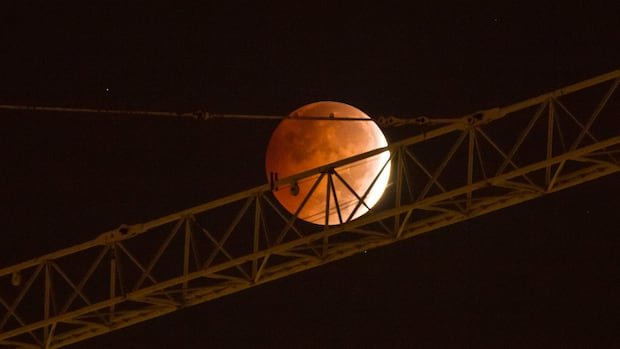

On the night of August 27-28, people across the country will have the opportunity to witness a partial lunar eclipse.
This eclipse follows closely after the total solar eclipse that was visible in Iceland, Spain, and a portion of Portugal about two weeks earlier.
Although this lunar eclipse will be partial, it will be quite deep, with up to 93 percent coverage at its peak.
Lunar eclipses occur when the moon passes through Earth’s shadow, known as the umbra. Before reaching the umbra, the moon first enters Earth’s outer shadow, the penumbra, which is dimmer and harder to see with the naked eye.
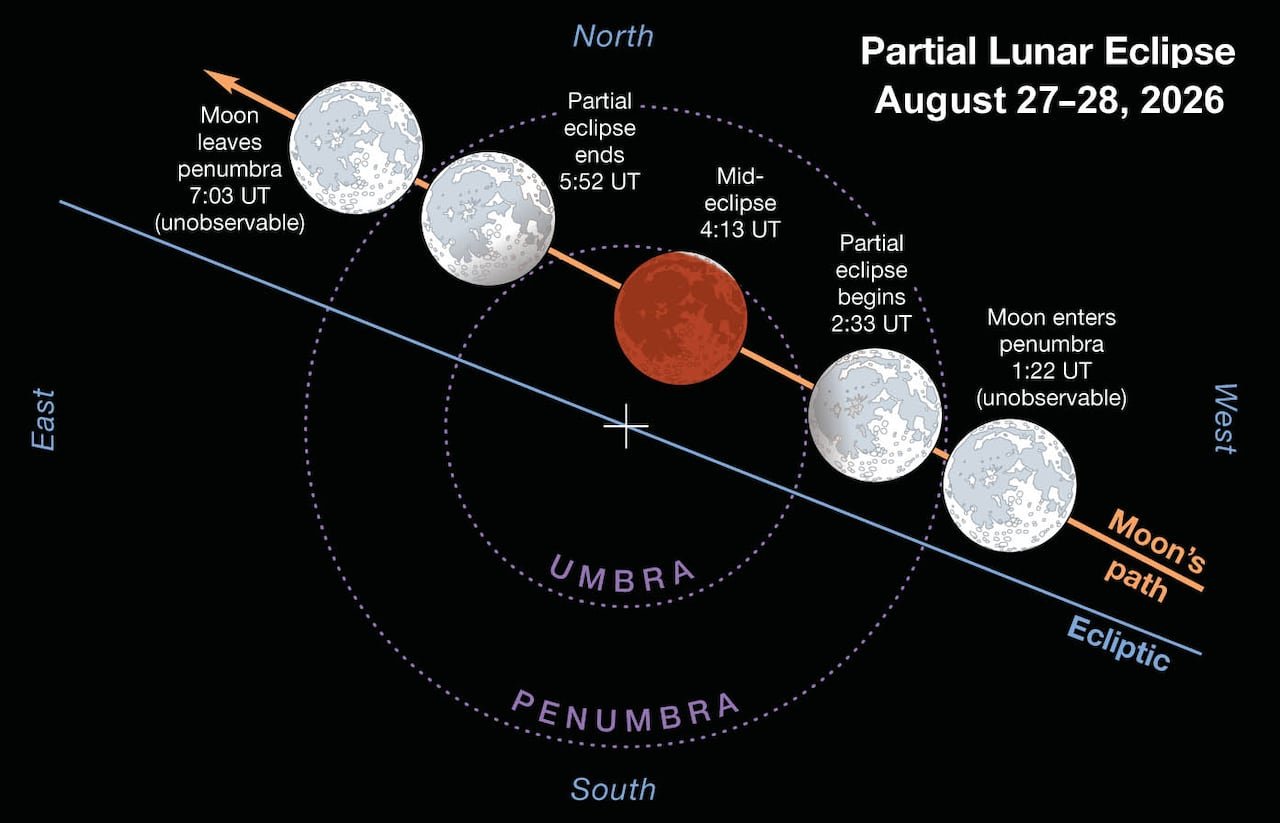
Most regions in Canada will have the opportunity to view the entire eclipse duration, with Western Canada witnessing the partial eclipse as the moon rises.
-
NASA plans to land humans on the moon by 2028. How achievable is this goal?
-
Should the aging and leaky International Space Station be retired sooner rather than later?
The good news is that unlike solar eclipses, there is no need for protective eyewear to observe a lunar eclipse.
Furthermore, a lunar eclipse unfolds over hours rather than minutes, unlike a solar eclipse.
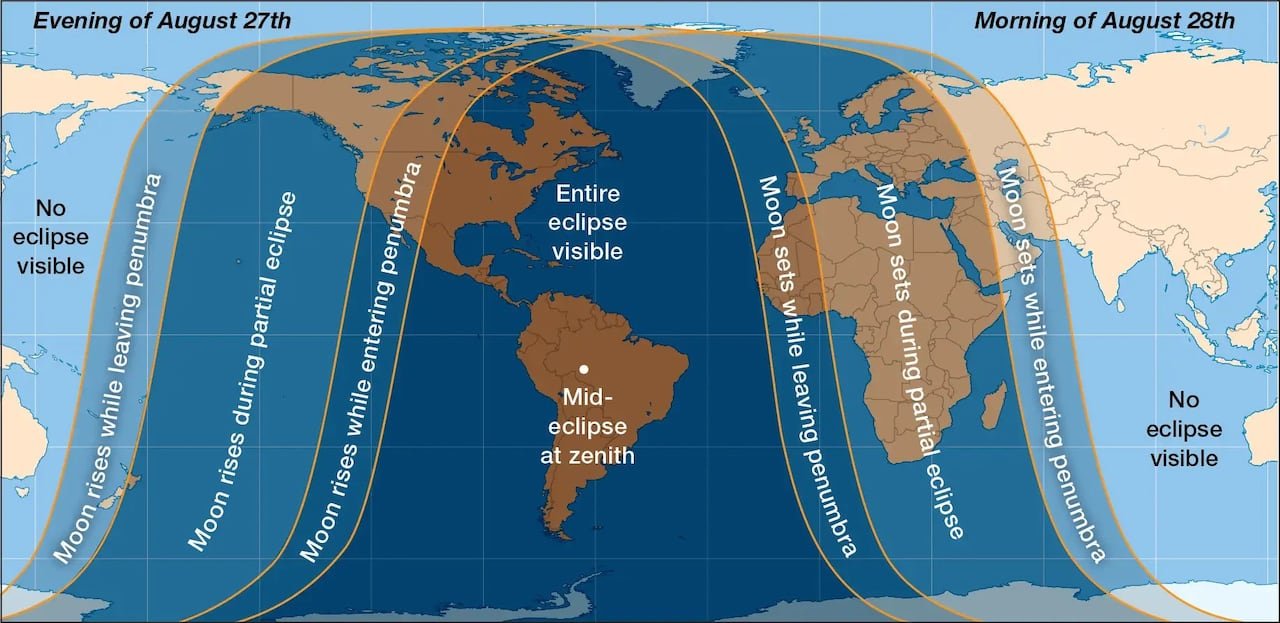
Best Time to Watch
The eclipse kicks off as the moon enters Earth’s penumbra around 10 p.m. ET, but the optimal observation time begins at 10:33 p.m. ET on August 27 and wraps up at 1:52 a.m. on August 28. The deepest phase of the eclipse is expected around 12:13 a.m., with most of the moon appearing darkened.
This event is just one of many celestial occurrences happening this month.
“August has been quite eventful with several astronomical events, including the partial solar eclipse on August 12th, the Perseids meteor shower, and the Jupiter-Mercury conjunction,” mentioned Elaina Hyde, director of the Allan I. Carswell Observatory at York University’s department of physics and astronomy in Toronto.
Will it be a “blood moon”?
“Since it’s a partial eclipse, it won’t turn completely red, but depending on your location in Canada, it may still appear quite red,” Hyde explained.
<p