

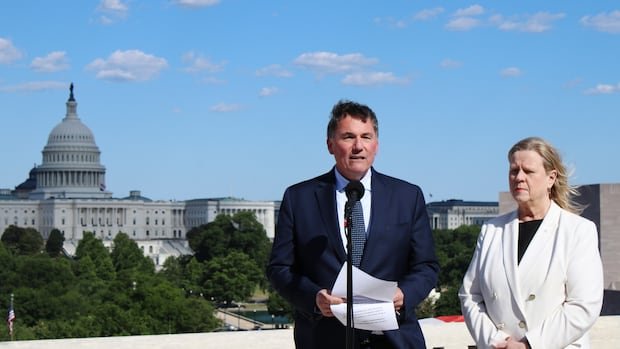

Canada’s Trade Minister, Dominic LeBlanc, and the U.S. Trade Representative are working towards presenting a potential trade deal to President Donald Trump as early as Monday, according to sources briefed on the matter. The aim is to provide Trump with a proposal ahead of the upcoming tariff deadline to avoid new 50 per cent levies on numerous Canadian imports set to take effect on August 19.
LeBlanc and U.S. Trade Representative Jamieson Greer met in Washington on Tuesday for the third time in three weeks. Following the meeting, neither LeBlanc nor Canada’s chief trade negotiator, Janice Charette, responded to reporters’ questions. The discussions are ongoing, as mentioned by LeBlanc in a post, indicating continuous engagement at the negotiation table.
While efforts are being made to prevent new tariffs on Canadian products, there is also a push for relief on existing tariffs on Canadian steel, aluminum, lumber, and automobiles. Additionally, both countries are hoping for an extension of the Canada-U.S.-Mexico Agreement (CUSMA) after the Trump administration chose not to renew the deal in July.
In response to the upcoming tariffs, the U.S. highlighted various trade issues, including Canada’s response to U.S. trade policies affecting the alcohol industry and alleged discrimination against U.S. motor vehicles and dairy products. Alcohol bans in most provinces, except Alberta and Saskatchewan, led to a significant decline in wine and spirit exports from the U.S. to Canada in 2025.
Conservative MP Michelle Rempel Garner emphasized the importance of Canada negotiating from a position of strength with the White House. She urged accountability from Prime Minister Mark Carney, stating that despite being in office for over a year, he has yet to secure a trade agreement with the U.S. Rempel Garner called on Carney to deliver on his promises to Canadians.
Conservative Leader Pierre Poilievre also called on Carney to demonstrate determination in trade negotiations. He emphasized the need for a comprehensive trade deal, including zero tariffs on softwood lumber, elimination of sectoral tariffs on steel and aluminum, a tariff-free auto pact, and full exemption from Buy America rules on infrastructure projects. Poilievre urged against policies of managed decline and emphasized the importance of standing firm in negotiations.
The ongoing efforts by Canada and the U.S. to address trade issues and potential agreements are crucial in ensuring economic stability and growth between the two nations.