

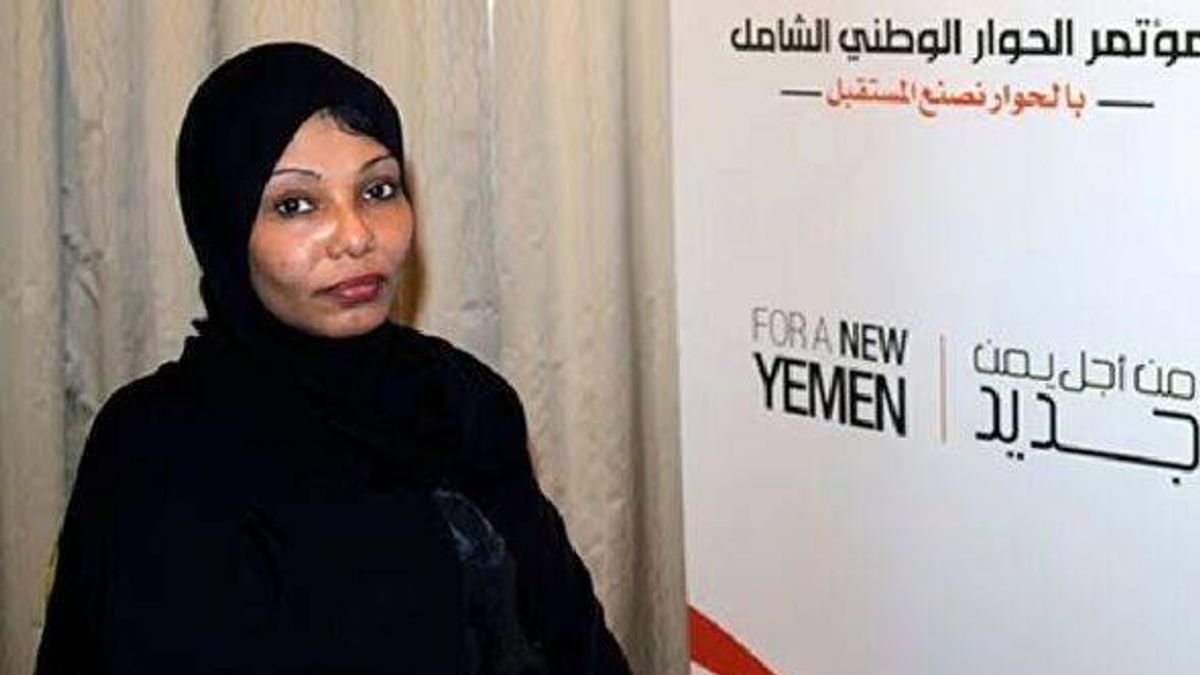

At the tender age of 11, Noora Al Shami innocently adorned herself in adult attire, oblivious to the harrowing experience awaiting her that night when her 35-year-old cousin and future spouse escorted her home to perpetrate a heinous act.
Amidst a three-day festivity in the Yemeni port city of Al Hudaydah, young Noora donned “three exquisite dresses” at the family gathering, only to be coerced into enduring years of sexual exploitation by Mohammed Al Ahdam.
To young Noora, the act of dressing up appeared as harmless amusement, yet it foreshadowed the distressing ordeal that awaited her. Recollecting the past, Noora, now 47, shared with The Guardian, “I was permitted to wear adult attire, adorn myself with jewelry, and receive gifts.” However, the thought of being victimized by a violent criminal never crossed her mind.
Upon the first instance of Al Ahdam exposing himself to Noora, she fled. Despite managing to evade the assault for 10 days, Al Ahdam’s sisters accused her of “disgracing our brother by rejecting him,” leading to the eventual assault, as reported by the Express.
The incident of rape left Noora’s body in shock. Recalling the traumatic experience, she expressed, “I was swiftly taken to the hospital – a child treated as a mere object of lust, yet the torment persisted. My grievances were disregarded, for I was deemed a lawful wife.”
Al Ahdam, a significantly elder distant relative, wed Noora in 1989 right after her 11th birthday. Noora lamented, “He was thrice my age and viewed marriage as a license to act as a depraved creature.”
In 2021, UNICEF disclosed a staggering statistic of 4 million child brides in Yemen. Years after her own child marriage, Human Rights Watch data from 2006 revealed that 14% of Yemeni girls were wed by 15, with over half married before turning 18.
Families frequently marry off their daughters to alleviate financial burdens in exchange for a dowry, despite scant protection for young girls under Islamic law.
Reflecting on her past, Noora narrated, “My husband provided a dowry of approximately $150, a substantial sum. However, the aftermath of the wedding was filled with fear and dread. I was separated from my parents and left with a stranger. He escorted me to his residence, shared with his widowed father in Al Hudaydah. Despite the pleasant facade of the home, I was overwhelmed with fear and tears.”
Noora endured two miscarriages within a year before giving birth to her son Ihab at the age of 13. Her daughter Ahlam arrived when she was 14, followed by her son Shihab at 15, each pregnancy fraught with complications.
The brutality of her husband Al Ahdam escalated over time. Recalling the torment, Noora stated, “He didn’t hesitate to strike me, even during pregnancy.” She added, “If his father hadn’t been present, the situation would have been far worse. His presence served as a form of restraint, yet I sustained severe injuries.”
Al Adham’s cruelty extended to their children, once violently handling their daughter Alham, resulting in the toddler being hospitalized due to injuries and bleeding.
After enduring a decade of abuse, Noora found solace in a program led by Oxfam and the Yemeni Women’s Union, supporting survivors of domestic violence. Subsequently, she bravely initiated divorce proceedings.
The road ahead was arduous. Noora engaged in a legal battle for financial assistance to raise her children. Displaying resilience, she resumed her education, qualified as a teacher, and now fervently advocates for stricter legislation against child marriage.
Refusing to be shackled by the past, Noora emphasized the need for transformative change in the lives of children beyond mere legal provisions. She stressed the necessity for a cultural shift, particularly in tribal communities, acknowledging the limitations of existing laws.
While efforts persist to raise the legal marriage age from 15 to 18, the repercussions of child marriage often endure a lifetime, both physically and emotionally.
Despite potential legislative amendments, Islamic law does not mandate a minimum marriage age, with Yemeni clerics frequently challenging statutory constraints.
Presently, 30% of girls in Yemen are wed before turning 18, while 7% are married off before reaching 15, according to Girls Not Brides advocacy group.
For support after reading this article, individuals can reach out to SARSAS at info@sarsas.org.uk or seek guidance from the NHS on coping with the aftermath of sexual assault.
Optimize your news reading experience by designating Daily Mirror as a ‘Preferred Source’ on Google News.