

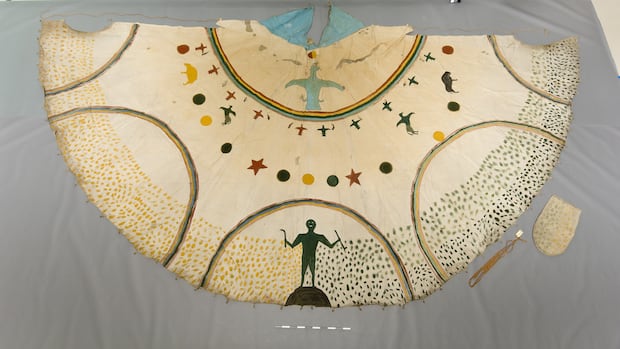

A professor from Saskatchewan has unearthed a significant aspect of the province’s past within the Smithsonian’s collection in Washington, D.C., and it is set to return home.
Andrew Miller, who teaches Indigenous studies at the First Nations University of Canada, was perusing the Smithsonian’s inventory while conducting research on birds when he came across a teepee cover that had been taken from the Kawacatoose First Nation nearly a century ago.
The cover was removed during the 1920s, but the family kept its legacy alive by passing down its story through generations.
“I remembered a student mentioning, ‘Oh, yes, we have items that are in major museums in the United States,’” Miller recounted.
As he sifted through the catalogue, he recalled that remark when he spotted the teepee cover, labeled “Dustyhorn—File Hills” with an acquisition date of 1926.
He noted his awareness of the Dustyhorn family residing near Touchwood, Sask., and reached out to Cory Dustyhorn, the current chief of the Kawacatoose First Nation, to share his discovery.
Dustyhorn confirmed that he was familiar with the tale of his great-great-grandfather Sîpiskwêsîkan’s teepee being taken long ago. Sîpiskwêsîkan was assured compensation for the teepee cover, which he never received.
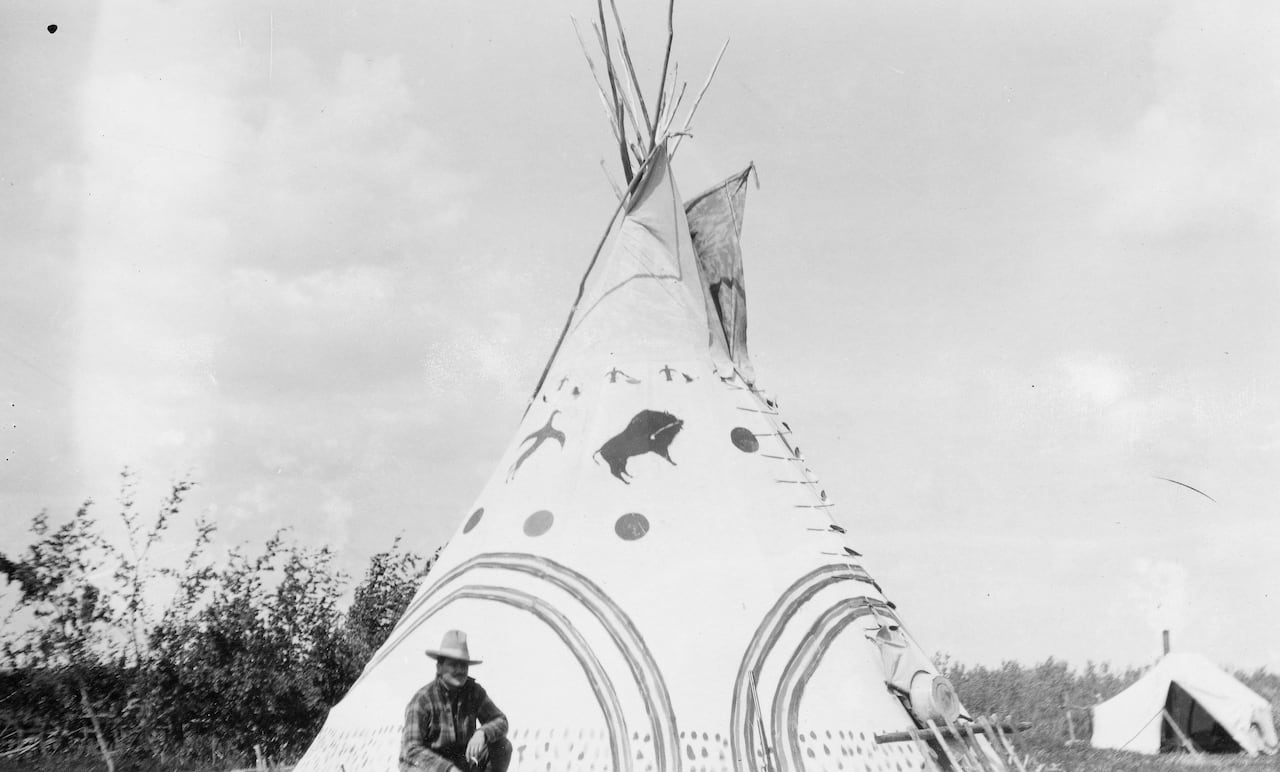
This historical image shows the teepee cover when it was first acquired by the Smithsonian. (Submitted by Andrew Miller)
Miller and Dustyhorn reached out to the museum, and Miller reported that the Smithsonian was very receptive throughout the entire process.
“They understand that some of these items should not be part of their collection, as they were obtained during a time when cultural ethics and respect were not aligned with today’s standards,” Miller stated.
-
Indigenous artifacts held in Vatican Museums finally heading back to Canada
-
Dozens of artifacts repatriated after donation to Chief Poundmaker Museum
The museum was attentive to Dustyhorn’s account and was open to the possibility of repatriating the teepee cover, ensuring it would return to the appropriate community.
“I shared a family story, explaining that someone began collecting artifacts in Alaska and then came to Saskatchewan, leading to the acquisition of our teepee,” Dustyhorn recounted.
He mentioned that the museum officials interjected, confirming that the individual who obtained the teepee in 1926 indeed initiated his journey in Alaska, thus validating the oral history.
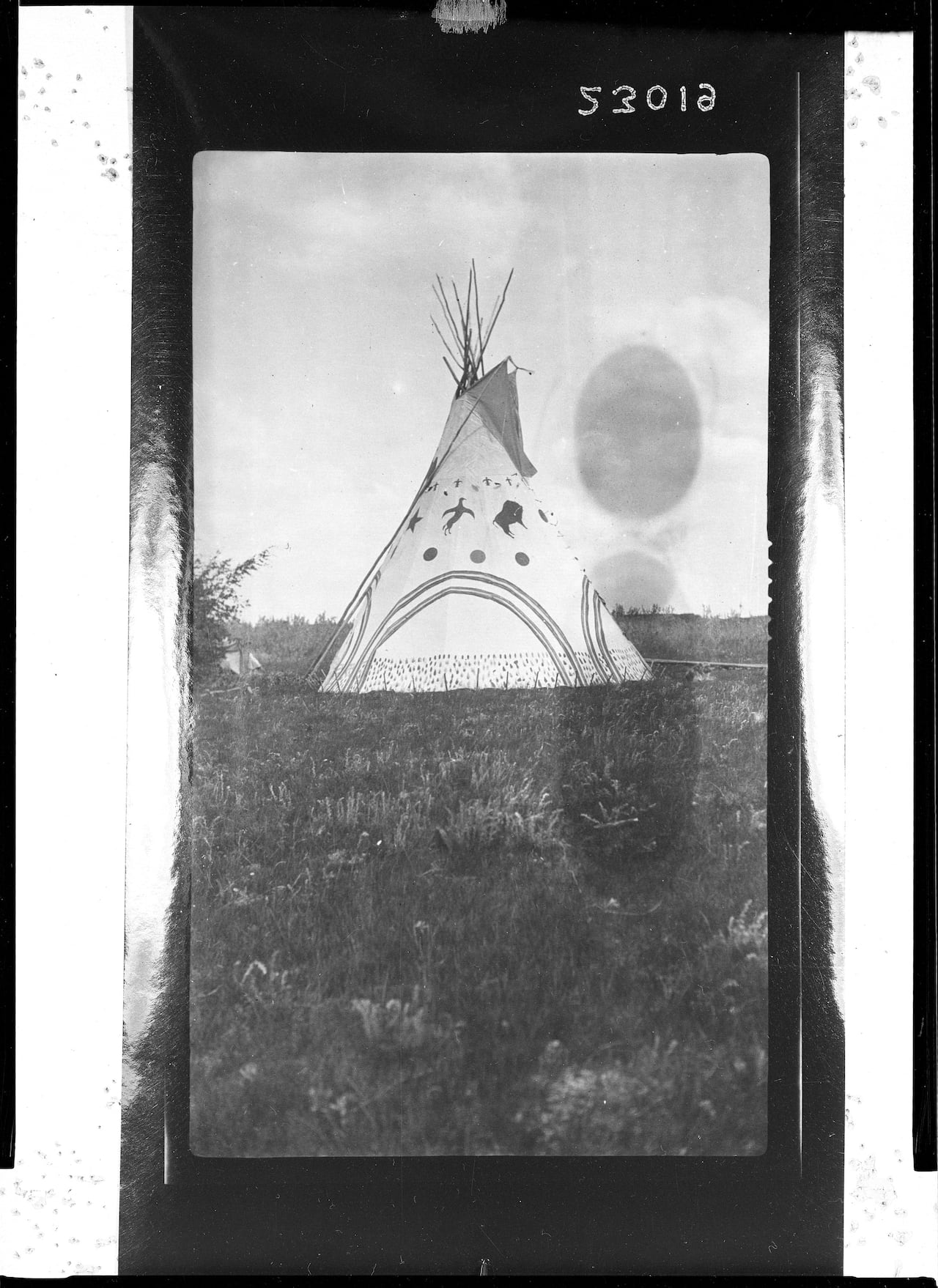
A picture of the teepee the Smithsonian Institute had on its online catalogue. (Submitted by Andrew Miller)
In an official statement, the Smithsonian recognized that some of its artifacts were obtained through unethical means. At that time, the Indian Agent served as a mediator between Indigenous owners and purchasers.
In 2022, the museum implemented a shared stewardship and ethical returns policy as part of an effort to amend some of its past wrongdoings.
“The policy acknowledges that ethical standards and professional collecting practices have evolved, and that the Smithsonian presently holds items it would not have acquired under today’s criteria,” the statement explained.
Now, a century after its theft, the teepee is on its way back to its original community.
Dustyhorn expressed that the return would enhance the connection between himself, his ancestors, his family, and the entire community.
He noted that plans are in place to establish a museum in Kawacatoose to showcase the teepee, although for the time being, it will be housed at the Royal Saskatchewan Museum in Regina.