

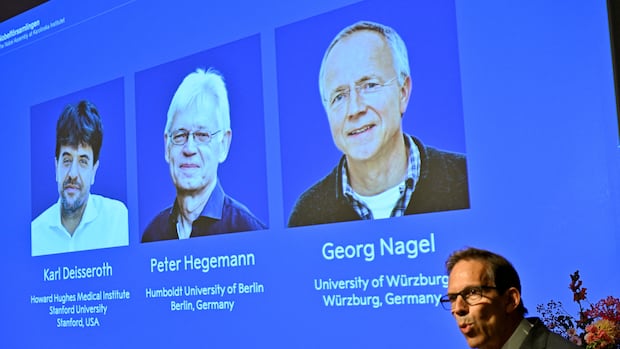

On Monday in Stockholm, it was announced that scientists Karl Deisseroth, Peter Hegemann, and Georg Nagel have been awarded the 2026 Nobel Prize in Physiology or Medicine for their “discoveries related to light-gated ion channels and optogenetics.”
Thomas Perlmann, the secretary general of the Nobel Assembly at Karolinska Institutet, explained that optogenetics allows researchers to control the activity of specific nerve cells within a living brain.
“This technique is currently employed in laboratories worldwide to uncover the secrets of the brain,” he remarked.
Perlmann shared that Deisseroth, 54, from the United States, Hegemann, 71, from Germany, and Nagel, 73, also from Germany, were all taken aback by the news of their award.
“They all expressed their delight at receiving the prize together, calling each other friends, and conveyed that it is a great honor to share this recognition,” Perlmann stated.
The Nobel Prize carries a monetary reward of 12 million Swedish crowns (approximately $1.7 million CAD), which will be divided among the three scientists. Deisseroth is affiliated with Stanford University in California, while Hegemann works at Humboldt University in Berlin and Nagel is based at the University of Würzburg in Germany.
Anna Wedell, a genetics professor and member of the Nobel committee, commented that a new chapter in neuroscience has begun, although it is still in its infancy.
“For the first time, we can truly begin to understand how the brain processes information and how various neurons communicate within the brain,” she added.
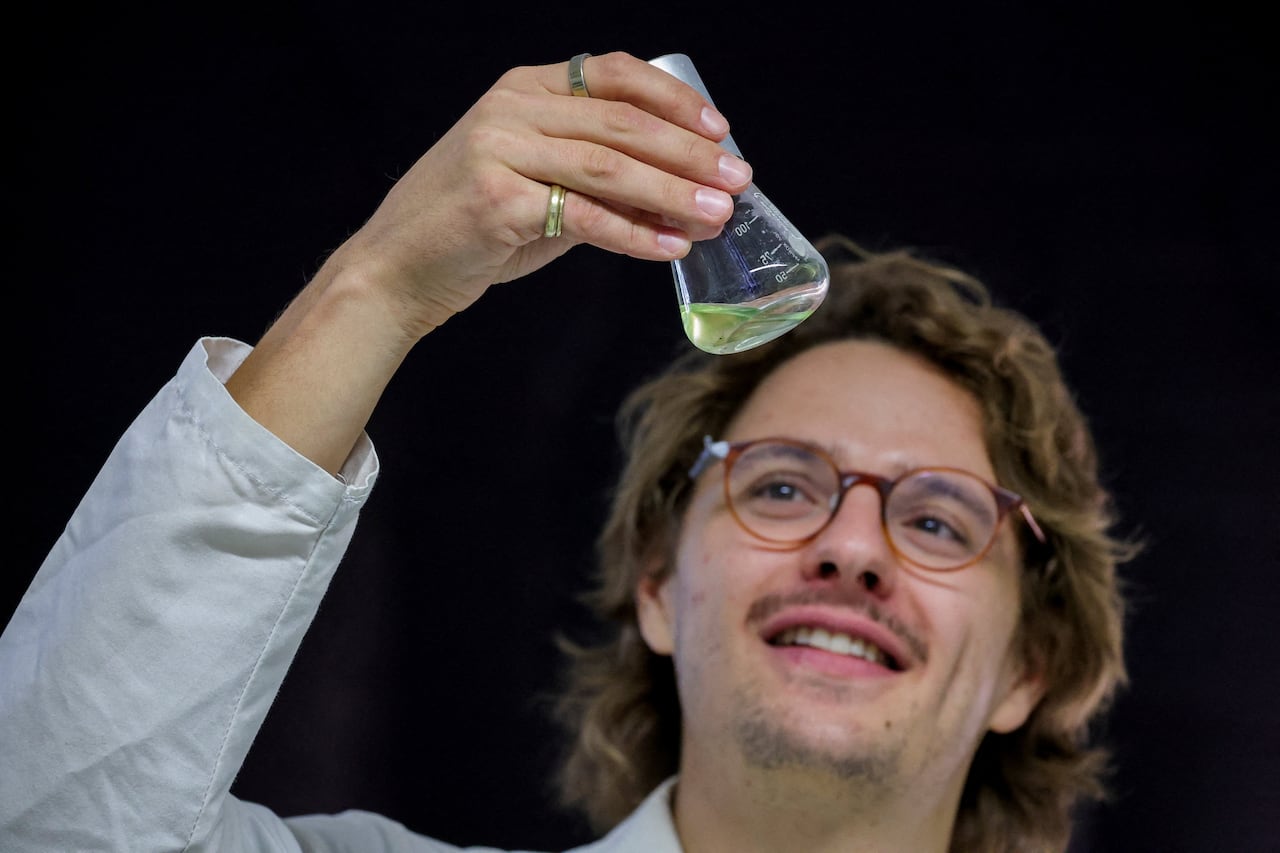
Darius Rauch, a team member of Peter Hegemann, showcases a flask containing solved Chlamydomonas reinhardtii in a Berlin laboratory on Monday. (Fabrizio Bensch/Reuters)
In clinical research, scientists are working to restore sight to individuals blinded by retinitis pigmentosa by introducing a light-sensitive protein into the retina.
There are also aspirations that optogenetics could enhance cochlear implants, facilitating more precise stimulation of the auditory nerve compared to current electrical devices.
“Patients lose their photoreceptors, specifically the rods and cones in the retina. However, healthy cells remain. Researchers utilize optogenetics to activate these healthy cells, stimulating the optic nerve and creating visual perception in the brain,” explained Per Svenningsson, a neurology professor at Sweden’s Karolinska Institute.
Decades of Progress
In the early 1990s, Hegemann explored the light response of the alga Chlamydomonas, which reacts in just half a millisecond. He proposed that a single protein was responsible for capturing light and functioning as an ion channel. Nagel tested this theory by injecting Chlamydomonas genes into frog eggs, leading to the discovery of channelrhodopsin-2, an ion channel that activates upon light exposure.
In 2003, they published findings indicating that this protein could be introduced into human and hamster cells to produce electrical impulses in response to light. By 2005, Deisseroth had successfully demonstrated the technique in rat nerve cells, and the term optogenetics was coined the following year.
“We have collaborated on numerous publications and discoveries over the years, had meetings, enjoyed beers together, so it’s truly perfect to share this moment with these two,” Deisseroth expressed.
Originally from Boston, Deisseroth had initially aimed for a career in neurosurgery but shifted to psychiatry after witnessing the struggles of patients—questioning why depression robs individuals of joy and what leads to autism.
The Nobel Prize announcements for physics and chemistry are scheduled for Tuesday and Wednesday, respectively, followed by literature on Thursday and the peace prize on Friday. The economics prize will be revealed on October 12.
Established by the affluent Swedish chemist and inventor Alfred Nobel, the Nobel Prize was intended, as per his will, to utilize the majority of his estate for “awards to those who, during the preceding year, have provided the greatest benefit to humanity.”
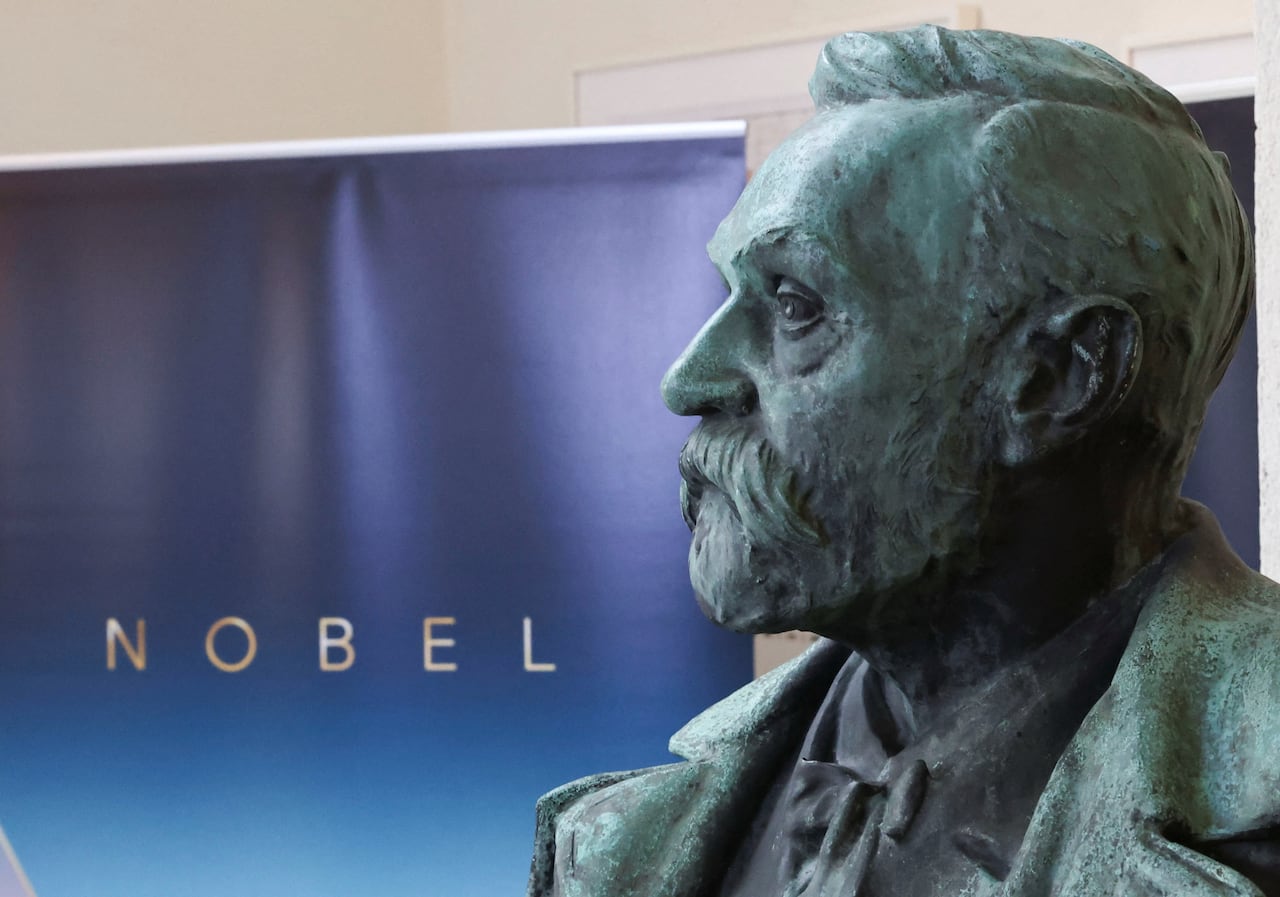
A bust of Alfred Nobel displayed in the Nobel Forum in Stockholm on October 5, 2026. (Tom Little/Reuters)
Nobel is primarily recognized as the inventor of dynamite, but he also penned poetry and plays and was fluent in Russian, French, English, and German by the age of 17. The five original prize categories reflect his core interests.
Nobel passed away in 1896, and the inaugural prizes named after him were awarded five years later.
The Nobel prizes are conferred to the laureates on December 10, marking the anniversary of Nobel’s death.