

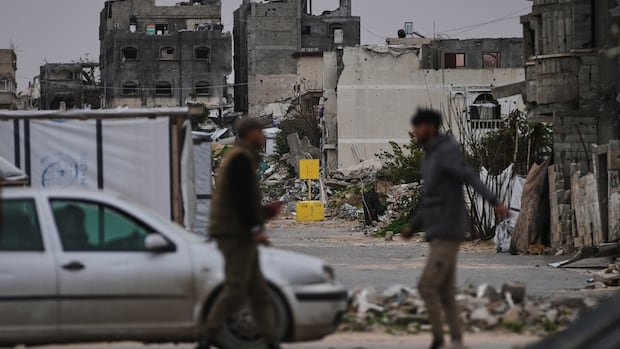

On the Gaza coast, resembling more of a tourist destination than a conflict zone, Palestinians are enjoying moments of peace amidst a war now in its third year. Despite discussions of peace talks and withdrawals, there is a prevailing skepticism that the conflict has truly ended.
Tamer Al-Sheikh expressed his disillusionment, stating, “This war has made me wary of hope. We have experienced multiple ceasefires, but the fighting persists.” Israeli airstrikes continue to target Hamas militants in Gaza almost daily, with the Israeli army expanding its control over the region, pushing Palestinians towards the Mediterranean Sea.
Following the Gaza peace accord last year, Israel agreed to retreat its troops behind the “yellow line,” representing the border of Israeli military authority within Gaza. However, Israel now commands over 60% of the territory, justifying this move as essential for operational security.
Israeli Prime Minister Benjamin Netanyahu has instructed military forces to advance further to 70%. Rejecting a U.S. proposal for a gradual withdrawal of Israeli forces and disarmament of Hamas, Netanyahu emphasized that no withdrawal would occur until Hamas disarms, leading to a stalemate in negotiations.
Israeli troops’ continuous advancement and the expansion of the yellow line have been confirmed through satellite imagery and on-ground reports. This territorial shift has had a profound impact on Gaza’s civilians, with over 1,200 Palestinians killed since the ceasefire began, bringing the total death toll of Gazans in the conflict to over 70,000.
Israel defends its actions as defensive measures to secure its borders and prevent hostile activities. The construction of barriers and fortified compounds along the yellow line aims to enhance security for both military personnel and nearby communities. However, these measures have raised concerns about the displacement of Palestinians and the increasing militarization of the region.
The systematic destruction of residential buildings and neighborhoods by Israeli forces has drawn condemnation from UN experts, who view it as an attempt to alter Gaza’s geography through illegal occupation. Palestinians affected by these actions fear being forced out of their homes and losing their land, despite their deep-rooted connections to Gaza.
While the Israeli government denies intentions of annexation, political pressures from right-wing groups and cabinet members signal a desire to expand Israeli settlements into Gaza. With upcoming elections and internal political dynamics at play, the rhetoric around territorial control in Gaza may serve both political posturing and strategic negotiation tactics.
For Palestinians living near the shifting yellow line, the looming threat of displacement and the encroaching presence of Israeli forces evoke genuine fears of being marginalized and pushed towards the sea.