


This week, a contentious situation unfolded in the realm of artificial intelligence (AI) involving two mathematicians, 10,000 AI agents, and a lucrative million-dollar prize. The dispute revolved around allegations of intellectual theft and unethical academic behavior.
While some observers view this incident as a testament to the power of AI in tackling complex challenges, others argue that it detracts from the essence of scholarly research and collaborative human efforts.
What transpired in the domain of pure mathematics that sparked controversy this week?
The Assertion
Earlier this week, OpenAI made a bold claim of resolving a long-standing mathematical problem associated with the Navier-Stokes equations.
These equations are pivotal in understanding the dynamics of fluids, encompassing gases and liquids, and their behavior over time. The challenge lies in predicting outcomes accurately without encountering physically implausible results, hence the problem’s inclusion in the renowned Millennium Prize Problems with a substantial monetary reward for a verified solution.

According to Ravi Vakil, a mathematics professor at Stanford University, understanding this enigma is akin to unraveling the universe’s mysteries and verifying its operational principles. The Navier-Stokes problem is analogous to comprehending everything about one’s foot, shoe, and a ball, while acknowledging the potential unforeseeable outcomes like kicking the ball into space.
- Cross Country Checkup is asking: What questions do you have about potential AI threats, and what should be done about them? Leave your comment here and we may read it or call you back for Sunday’s show
The challenge lies in determining the occurrence of such breakdowns. OpenAI asserts that under specific conditions, the equations can yield absurd, physics-defying results, at least theoretically.
Moreover, the computational task involved approximately 10,000 independent AI agents capable of autonomous operation, equipped with tools like internet access and coding capabilities.
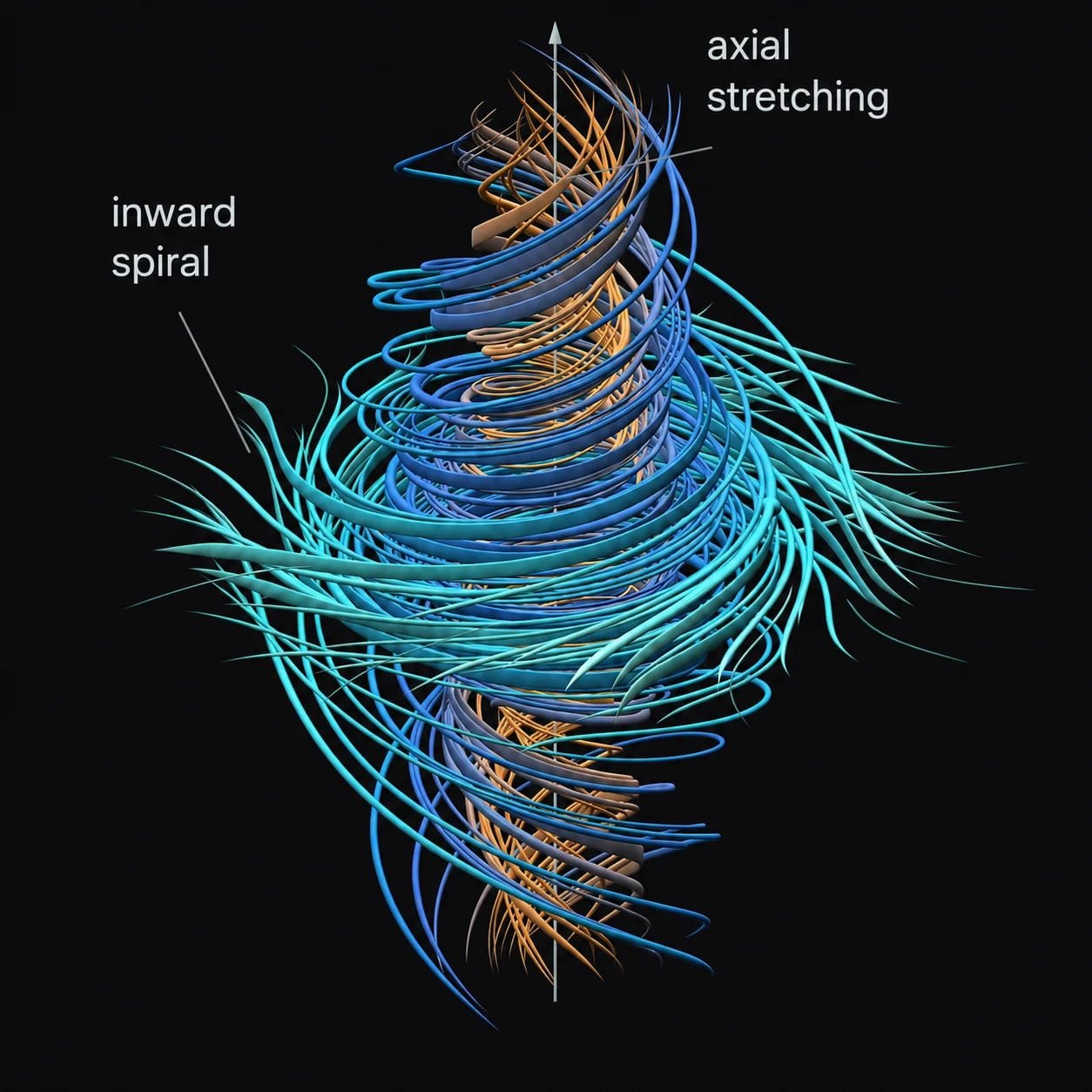
Within a span of 88 hours, OpenAI claims that its agents successfully cracked this centuries-old puzzle, which holds significance in real-world applications such as aircraft design, artificial organ development, and climate forecasting.
Vakil expresses his lack of astonishment at OpenAI’s feat but acknowledges the need for thorough verification of the claim by human experts.
Vakil, originally from Toronto, stated, “It passes machine checks, but we know better than to believe those.”

