

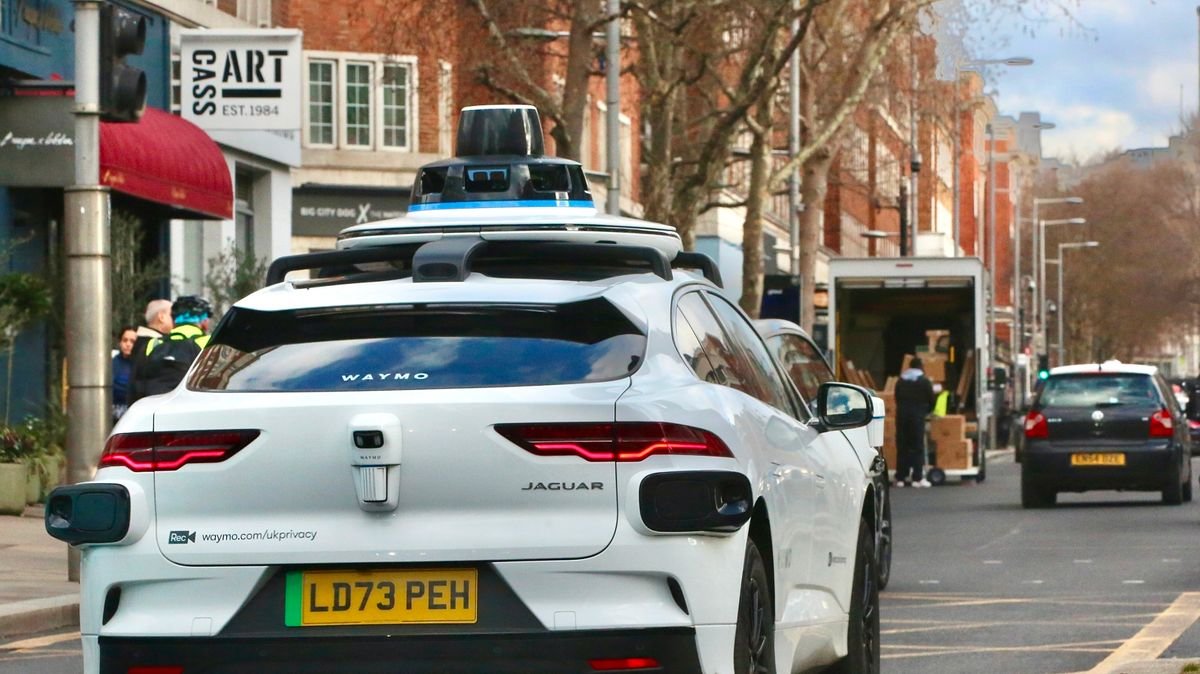

An army of autonomous taxis could soon hit the roads in the UK, with plans to launch this fall. Waymo, a US company, aims to introduce its fully self-driving taxi service in London by the end of the year. The company, a subsidiary of Google, has been testing its AI-powered driverless cabs, known as robotaxis, on the streets of the capital.
Before being permitted to pick up passengers, Waymo’s service must receive official safety approval. The company asserts that its technology can significantly reduce traffic accidents, as well as injuries to pedestrians and cyclists. Despite the expected higher fares compared to traditional human-driven Uber and black cabs, Waymo believes its service will attract individuals concerned about human drivers, especially in nighttime or privacy-sensitive situations.
Nicole Gavel, Waymo’s senior director of business development and strategic partnerships, stated, “Our aim is to become the most trusted driver in the world.” She emphasized the potential for enhancing road safety through their technology and described the experience of riding in one of their cabs as “magical.”
While the size of the upcoming London fleet remains undisclosed, Waymo currently operates 1,000 vehicles in San Francisco and 700 in Los Angeles. The company does not rule out expanding its self-driving cab services to other cities and towns in the UK in the future.
In a parallel move, Uber is also testing autonomous taxis in London. Waymo executives have expressed confidence in their advanced cars’ ability to navigate diverse UK conditions, from complex road systems to inclement weather. The technology continuously monitors the surroundings of the vehicle, enabling it to anticipate unexpected events, such as pedestrians suddenly emerging from blind spots.
Ben Loewenstein, Waymo’s head of policy and government affairs for the UK and Europe, claimed that their technology provides a superhuman level of perception. The company’s autonomous technology will be integrated into a fleet of electric Jaguar I-Pace cars.
Despite Waymo’s optimism, skepticism exists among some. Steve McNamara, general secretary of the Licensed Taxi Drivers’ Association, raised concerns about the public’s trust in autonomous vehicles for transporting children. Andy Prendergast of GMB highlighted the significant social implications, including potential unemployment, associated with driverless cars and taxis.
Tesla’s self-driving software has faced several accidents in the US, including fatal incidents. While Waymo’s driverless taxis in London are currently stationary, they feature advanced technology visible through their distinct exterior design and interior amenities. As testing progresses, the transition from human-operated to fully autonomous rides will be a pivotal moment for Waymo’s technology.
Waymo and other companies developing similar technologies are optimistic about the reception of autonomous vehicles among UK residents. While many may be eager to experience a driverless ride, the acceptance of potentially higher costs remains uncertain.