

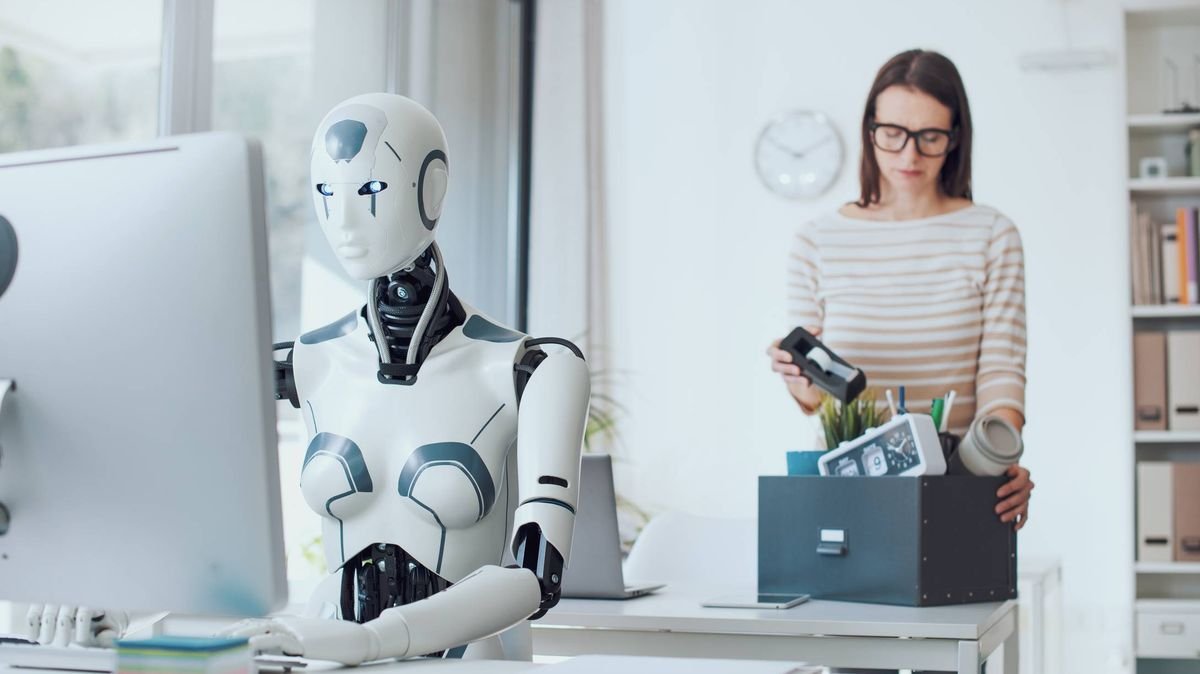

A major technology company responsible for the world’s most widely used chatbot has raised alarms about the threat that artificial intelligence poses to job security. The creators of ChatGPT conducted a study identifying 44 professions at risk of being automated by AI. They employed a specialized assessment called GDPval to compare advanced technology with human workers in nine of America’s most profitable industries.
As the US Military advances AI-driven pilot drones capable of launching attacks on major cities like Beijing and Moscow, concerns grow for workers in retail and sales roles. The rise of AI for financial planning has also been highlighted as Brits turn to chatbots for assistance.
In a competition between AI systems and human professionals, the Anthropic’s Claude Opus 4.1 system stood out by surpassing human performance in nearly half of the tasks assessed, with some professions experiencing significant defeats.
The study subjected 44 professions to rigorous evaluations against AI systems, with nurses analyzing skin conditions and engineers designing digital 3D models. The assessments were conducted without revealing whether humans or AI completed each task, solely focusing on the quality of results.
While acknowledging that the tests do not capture the full scope of job roles, the company emphasized the significant impact AI is expected to have across various sectors. Retail workers face a particularly challenging future, with chatbots outperforming them in the majority of tasks.
Certain professions, like film directors and journalists, have shown resilience against AI advancements. However, roles such as sales managers and shipping clerks are highly vulnerable to automation.
Different chatbot systems exhibited varying performance levels, with some excelling in specific tasks. The company’s top-tier system achieved a notable win rate across professions, indicating the rapid pace at which AI is catching up to human capabilities.
Company executives express concerns about job displacement due to AI, with the potential for up to 40% of roles facing automation in the future. Despite these findings, the company aims to position AI as a tool to enhance human work rather than immediately replace it.