


The government’s credibility has been a subject of skepticism for a long time, with many people cautious about accepting official statements at face value. Despite the prevalence of spin and strategic messaging, there is usually an element of truth in government communications, albeit often presented in a favorable light.
However, the current administration under Donald Trump has taken a different approach. Recent events have exposed instances where the administration propagated falsehoods, such as falsely labeling an unarmed woman in Minnesota as a “domestic terrorist” shortly after a shooting incident. Moreover, they have been caught creating a misleading image of a US citizen arrested for protesting, eroding trust in their statements. This pattern has led to a widespread perception that information from the White House should be treated as untrustworthy unless verified.
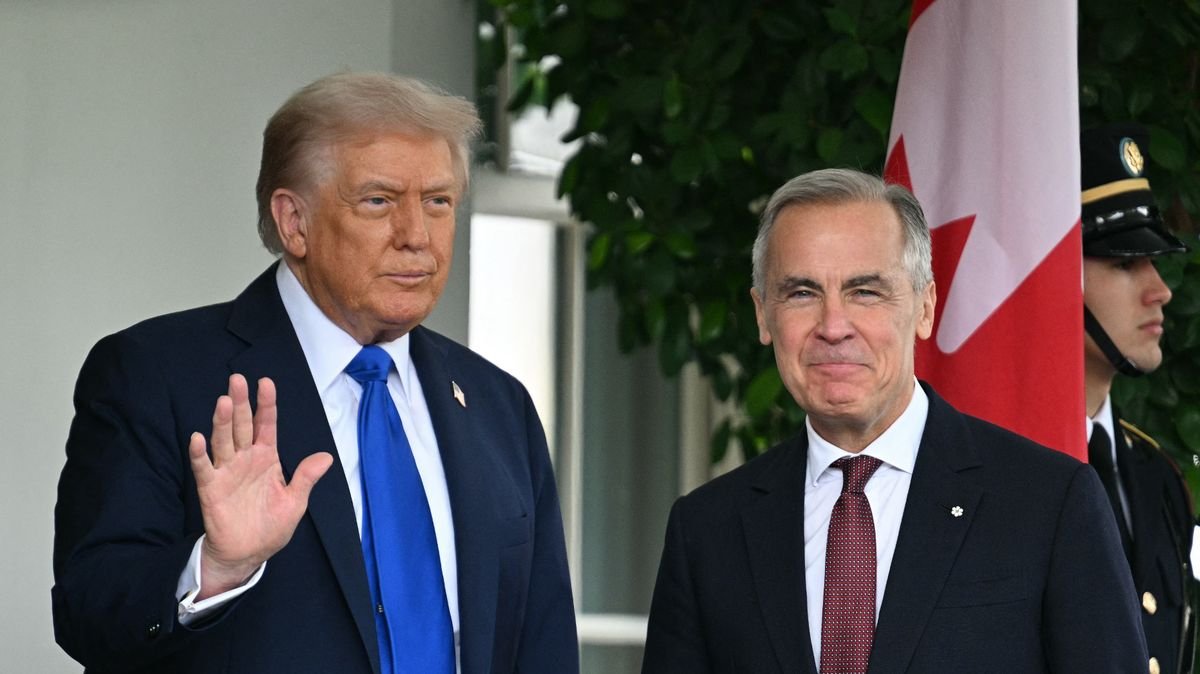
In a recent development, Trump threatened Canada with a 100% tariff if they proceed with a trade agreement with China. This threat was conveyed through a social media post targeting Canadian Prime Minister Mark Carney, warning against facilitating Chinese trade to the US. Despite ongoing trade tensions, Canada had negotiated a deal to reduce tariffs on Chinese electric vehicles in exchange for lower import taxes on Canadian agricultural products, a move that Trump initially praised.
The situation escalated further when Trump rescinded Carney’s invitation to join a peace board, an action that Carney likely found unsettling. Trump’s assertion in Davos, Switzerland, that Canada’s existence is reliant on the US was met with rebuttal from Carney, emphasizing the importance of resisting autocratic influences.
Notably, musician Sir Rod Stewart entered the discourse by criticizing Trump for derogatory remarks about troops in Afghanistan. Stewart, expressing his dismay as a knight and a post-war era individual, urged UK politicians Keir Starmer and Nigel Farage to demand an apology from Trump for his comments.
In another peculiar incident, the White House shared a digitally altered image of Trump with a penguin, symbolizing unity with Greenland. However, the inaccuracies in the image, such as the absence of penguins in Greenland, drew widespread attention. Subsequently, various government-controlled Twitter accounts followed suit by posting similarly misleading content, emphasizing a disregard for factual accuracy.
Furthermore, the White House faced criticism for disseminating a fabricated image of a woman allegedly arrested during a protest in Minnesota. Despite the image being manipulated, the administration defended its actions, citing continued law enforcement priorities.
In a separate development, clergy members protesting immigration enforcement at a Minnesota airport were arrested for trespassing and non-compliance. The clergy aimed to demonstrate support for migrants and resist federal intervention in Minnesota. Additionally, an FBI agent resigned due to perceived interference in the investigation of Renee Good’s killing, highlighting concerns over impartiality.
Moreover, controversy arose when the National Park Service removed an exhibit on slavery in response to an executive order emphasizing historical accuracy. This action sparked backlash, with critics lamenting the erasure of crucial historical narratives, underscoring the importance of acknowledging both positive and negative aspects of history.
Overall, recent events underscore the contentious nature of government communications and actions, prompting scrutiny and calls for accountability from various quarters.