

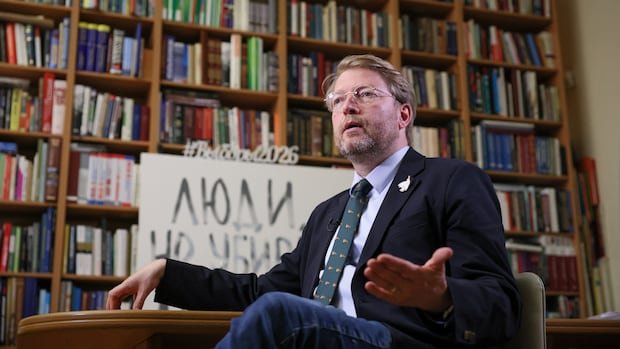

The head of Russia’s single registered anti-war party has affirmed his commitment to staying in the country and advocating for change, despite facing escalating pressure from authorities that has resulted in the party’s disqualification from the upcoming parliamentary elections.
In a recent development, the Supreme Court decided to exclude the post-Soviet liberal party Yabloko, meaning “apple” in Russian, from the September vote. Party leader Nikolai Rybakov disclosed to Reuters that the ruling reflected the government’s apprehension that their stance on ending the ongoing conflict in Ukraine was resonating with the electorate. Rybakov emphasized the significance of the overwhelming public support they currently enjoy, which was demonstrated by hundreds of supporters protesting outside the court premises, chanting “shame” loud enough to be heard inside.
Once a prominent liberal voice in parliament and a vocal critic of the government, Yabloko now holds only a few regional seats and lacks representation in the State Duma, where the Putin-backed United Russia party dominates. The forthcoming election will determine members of the 450-seat lower house, with United Russia poised to maintain its supremacy. Despite this, Rybakov noted that Yabloko would present a stronger challenge if granted the opportunity to participate.
Yabloko is presently contesting the Supreme Court’s decision, which was prompted by a lawsuit alleging undisclosed campaign support from Western entities, among other accusations that the party refutes.
Rybakov, a 47-year-old opposition stalwart, affirmed his decision to remain in Russia despite stringent censorship laws and wartime regulations that have compelled many dissenting voices to either flee the country or face legal repercussions. He stressed the importance of effecting change from within Russia, stating that leaving the country would not facilitate the desired political transformation.
Public sentiment against the war is challenging to gauge due to stringent government controls on dissent, but data from the Levada Center, a non-governmental polling firm on Moscow’s foreign agent list, indicates a decline in support for the Russian military’s actions in Ukraine. Rybakov highlighted that Yabloko’s concise manifesto advocating for peace and a democratic Russia has attracted a surge of new supporters, underscoring a widespread desire within Russian society to end the conflict.
The party has garnered significant traction on social media, with numerous videos circulating in support of Yabloko. Many of these videos feature individuals holding apples as a symbol of their voting preference for the upcoming election, or dancing to Russian songs referencing apples, in a display of solidarity with the party’s message.