

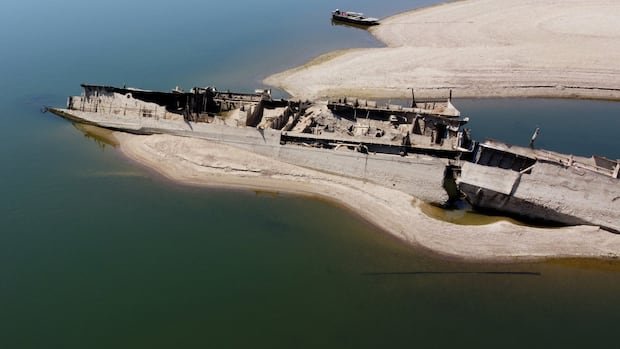

In the Danube River, remnants of Nazi German warships that were scuttled during World War II are resurfacing due to decreasing water levels, showcasing the severe heat and drought affecting Europe this summer. The fifth heat wave since May is forecasted to impact western Europe, with temperatures soaring close to 40 degrees Celsius in Spain, France, and Italy before rising even higher in central and northern Europe.
The Copernicus climate monitoring service of the European Union confirmed that June and July marked the hottest months on record in western Europe, leading to approximately 25,000 heat-related deaths. The scorching temperatures have exacerbated devastating wildfires and caused water levels in crucial waterways like the Danube to hit record lows.
Climate scientists emphasize that the exposed shipwrecks are a visible indication of the broader issue at hand: the acceleration of heat and drought due to fossil fuel-induced climate change, impacting wildfires, agriculture, shipping, and energy systems throughout Europe. Richard Allan, a climate scientist at the University of Reading in England, warns that the current summer’s events are just the beginning of the repercussions of global warming.
Historians estimate that around 200 warships were intentionally sunk by the Nazis near the Serbian city of Prahovo in 1944 to hinder Soviet forces. Recent reports reveal an increased number of visible wrecks in the Danube, including a German military motorcycle in Hungary and an unexploded British bomb in Slovakia, due to the river’s receding water levels.
The diminishing Danube water levels have raised pressing concerns for multiple countries along the river, impacting activities like crop irrigation and nuclear power plant operations. Efforts to mitigate the effects include restrictions on water use for farming, redirecting river flows, and adjusting power generation strategies.
Experts note that the current climate conditions, exacerbated by heat extremes and drought, are clear indicators of worsening climate change effects. The rise in average temperatures in Europe, coupled with the drying Danube, underscores the intensification of heatwaves and the interplay between heat and drought. Concerns mount as the Danube’s low levels signal environmental damage and increased wildfire risks.
Looking ahead, experts predict that the impact of climate change will continue to worsen, with upcoming years expected to bring even higher global temperatures. The emergence of a potential ‘super El Niño’ event and ongoing greenhouse gas emissions further contribute to the escalating climate crisis, necessitating urgent action to safeguard natural resources and combat climate change effectively.