

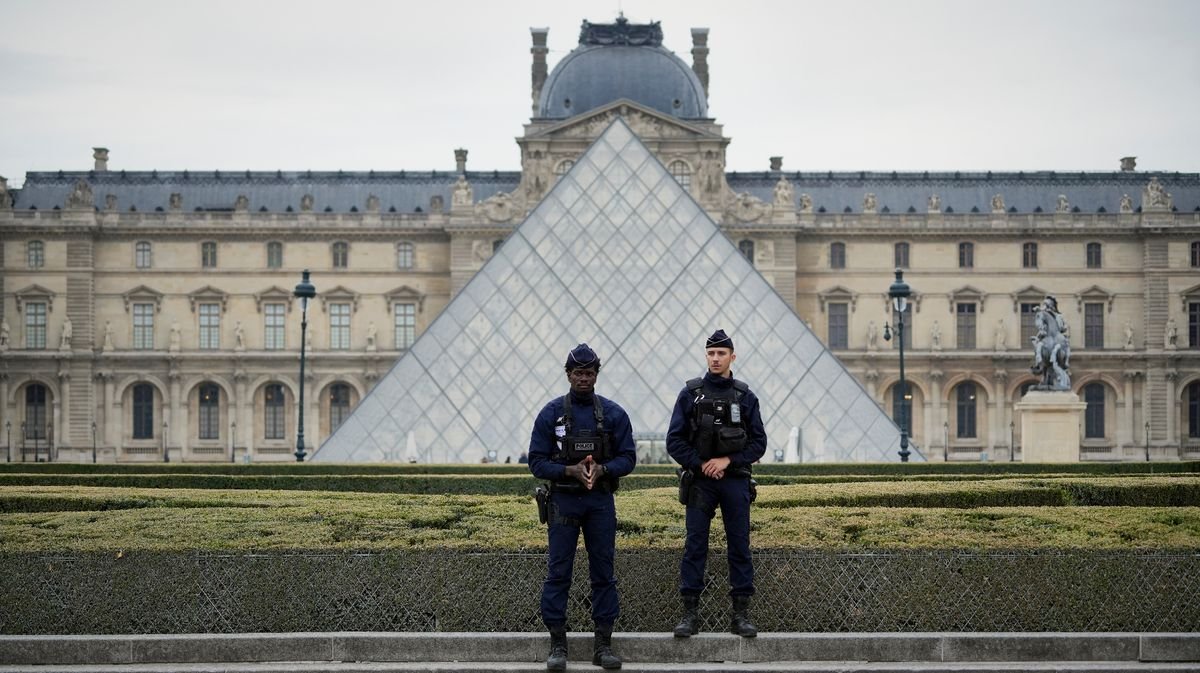

An audacious heist lasting minutes where daring thieves stole irreplaceable treasures from the renowned Louvre museum was only made possible due to significant lapses in security measures.
French authorities confirmed that robbers looted items of immense historical significance from the iconic art gallery in Paris in a swift operation that saw them enter and exit within a mere seven minutes. The unidentified culprits managed to make off with artifacts once owned by French royalty and colonial leaders by casually entering and breaking the glass enclosures that housed the valuables.
The incident sparked national outrage, prompting questions about how the thieves managed to breach security at one of the world’s most heavily guarded museums.
So how did the thieves abscond with highly prized national treasures? Here are some of the security deficiencies that have been uncovered:
The Louvre is currently under construction for the government’s Nouvelle Renaissance project, which involves installing a new entrance on the premises. During this interim phase, the portion of the museum facing the River Seine is a construction zone that the thieves reportedly exploited to their advantage.
As reported by French daily Le Parisien, four masked individuals entered the museum through the construction area around 9:30 am, utilizing an unattended cherry picker to access the first-floor window of the Apollo Gallery jewel room where the valuable items were kept.
Upon descending into the Apollo Gallery, two of the perpetrators brandished a battery-operated disc cutter, a tool commonly seen in heist movies like Mission Impossible, to cut through the glass panes. According to the Confederation of Fire Protection Associations Europe (CFPA-Europe), multiple security oversights were evident at this juncture.
The organization stresses the importance of museums having tested and approved burglar-resistant windows, or alternative measures like iron bars if such windows are not feasible. In cases where these options are unavailable, installing alarms capable of alerting law enforcement is recommended.
Although a localized alarm was in place, French Senator Natalie Goulet mentioned that it had recently malfunctioned, leaving uncertainty about its operational status. While a broader alarm did sound, it failed to pinpoint the exact breach location.
The initial challenge faced by the intruders were museum guards, whom they encountered after gaining access to the Apollo Gallery without causing a commotion. However, the guards’ response proved ineffective as the robbers intimidated them into evacuating the premises. Officials confirmed that no violence occurred during the heist.
After departing, the thieves proceeded to shatter the cases holding the precious jewels. Another critical flaw noted was the absence of CCTV surveillance in one of the three rooms in that section of the museum, creating a significant blind spot that allowed the culprits to evade detection.
Following the heist, the gang attempted to set their vehicle ablaze upon leaving the Louvre. Their efforts were thwarted by a vigilant museum staff member, preventing further damage, according to France’s culture ministry.
Despite the intervention, the thieves managed to escape the area, fleeing on two scooters. Their identities remain unknown, with an extensive investigation underway to apprehend the elusive group.
This recent robbery at the Louvre adds to a history of high-profile thefts at the museum, including a notable incident earlier this year. Notably, in 1998, thieves made off with Le Chemin de Sevre by Camille Corot by simply removing pegs from its frame. Nearly three decades later, the painting remains missing, underscoring the ongoing challenges in securing valuable artworks despite security enhancements implemented post-previous thefts.