

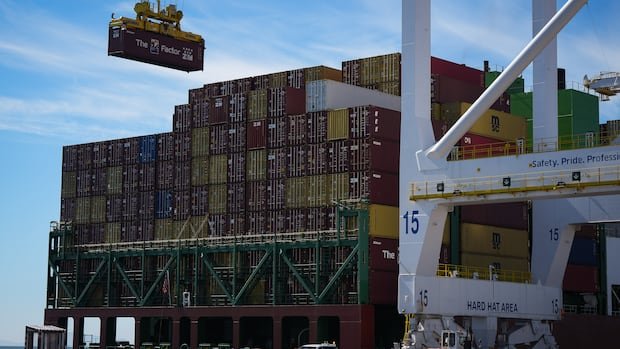

As the deadline looms for Canada to finalize a trade agreement with the United States, a large number of Canadian businesses are feeling the pressure, anticipating a potential loss of up to half of their sales if the new tariffs are implemented. The upcoming round of U.S. tariffs is scheduled to come into effect on Wednesday unless an agreement is reached at the last minute. These tariffs would impact around $28 billion worth of Canadian goods, including electronics, dairy products, alcohol, and timber, on top of existing trade sanctions.
Negotiations are reaching a critical stage, with Canadian officials likely to meet with U.S. Trade Representative Jamieson Greer before Prime Minister Mark Carney and President Donald Trump hold discussions ahead of the tariff deadline. The final decision on any deal will ultimately rest with President Trump, as emphasized by America’s chief trade negotiator.
Concerns are rising among Canadian businesses that the proposed tariffs could not only lead to higher prices for American customers but also make cross-border shipping economically unviable. Todd Stafford, the president of Northern Cables in Brockville, Ontario, expressed worries about potentially losing all U.S. business if the tariffs are imposed, as half of the company’s sales depend on U.S. buyers.
Despite hoping for a resolution or a possible extension, Stafford highlighted the significant impact the tariffs would have on their operations, potentially leading to job losses and exacerbating existing challenges faced by the company.
Impact on CUSMA Shield
Since the beginning of his second term in January 2025, President Trump has targeted various sectors of Canada’s economy, including auto parts, lumber, steel, and aluminum. However, the majority of cross-border trade has been shielded under the Canada-U.S.-Mexico Agreement (CUSMA), signed in 2020. The introduction of new tariffs could remove this protection, affecting approximately five percent of overall trade between Canada and the U.S., encompassing items such as hockey equipment, certain flowers, and antiques.
While energy, potash, and critical minerals are expected to remain exempt from the tariffs, many Canadian businesses are already feeling the impact. Cindy Baldassi, the owner of CindyLouWho2 in Calgary, expressed concerns about potential revenue loss, having already suspended U.S. shipping on her platforms and increasing prices on her products as a precaution.
With uncertainties surrounding the future of trade relations, businesses are exploring alternative markets beyond the U.S. to mitigate risks. Canadian Federation of Independent Business (CFIB) vice-president Jasmin Guénette emphasized the importance of diversifying away from the U.S. market amid the current trade uncertainties.
Preemptive Measures and Concerns
Even in anticipation of the new tariffs, some businesses have already experienced adverse effects. Randy Williams from Monterey Textiles noted the impact on the textile industry, with layoffs, reduced orders, and potential shifts in customer preferences already being observed.
In Alberta, beekeeper Lorne Prins shared concerns about a surplus of honey in the market due to potential disruptions caused by the tariffs, emphasizing the need for local support to navigate the challenges ahead.