

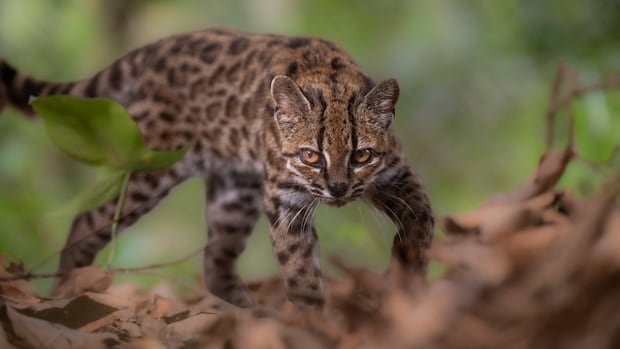

A small wild cat living in the cloud forests of Bolivia has been officially recognized as a new species, marking the first time in over a century that a new living cat species has been identified. Known locally as Tilcayo, this cat belongs to a group of tiger cats found throughout South America. Discovered in Bolivia’s Yungas forest, a region characterized by mountainous terrain, cloud-covered forests, and high humidity, the cat measures approximately 46 centimeters (18 inches) in length and weighs around three pounds, making it smaller than the average domestic cat.
Genetic analysis has confirmed the cat as a new species and it has been named Leopardus tilcayo, retaining its local designation. The cat’s fur is light brown with irregularly shaped rosettes across its body, according to Paola Nogales Ascarrunz, a National Geographic explorer and one of the study’s authors.
The cat’s biology and lifestyle are still largely unknown, but evidence from scat samples containing small rodent remains suggests a dietary preference for small rodents. Camera-trap observations indicate that the cat may be more active during nighttime.
Tiger cats, a group of cryptic species that are difficult to distinguish based on appearance alone, were previously considered a single species. However, genetic studies conducted decades ago hinted at the presence of multiple species within this group. The recent discovery of the Tilcayo species adds to the growing understanding of the diversity within the tiger cat group.
The International Union for Conservation of Nature currently lists tiger cats as two “vulnerable” species with declining populations. The researchers have alerted the IUCN about their findings, which could lead to a reevaluation of the conservation status of these cats. The study underscores the importance of protecting the Yungas ecosystem, which is under threat from deforestation, agricultural expansion, human-induced fires, and mining activities.
Eduardo Eizirik, a senior author of the study, highlighted the significance of discovering new species and emphasized the need to conserve these species at risk of disappearing before being identified.