

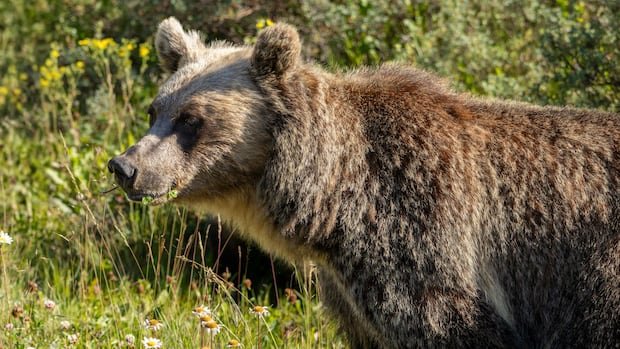

The quantity of grizzly bears taken down by licensed hunters in Alberta under the government’s approval has markedly increased in recent months. This year, a total of 13 grizzly bears were hunted down via Alberta’s Wildlife Management Responder Network, with 11 of these occurrences happening within the past three-and-a-half months, primarily due to livestock predation.
Since its establishment in June 2024, the program has led to 14 grizzly bear fatalities, with only one recorded in 2025. The province’s team of “problem wildlife” responders comprises skilled Albertan hunters who were selected after applying for the initiative. These hunters are summoned by the province when a situation arises that necessitates the killing of a grizzly bear.
The Ministry of Forestry and Parks emphasized that its wildlife management strategy is grounded in science and expert guidance, focusing on public safety, conflict reduction, and grizzly bear population recuperation. While specifics about the recent kills were undisclosed, the province clarified that all grizzly bear deaths authorized by the program occurred outside designated recovery zones.
Grizzly bears were classified as a threatened species by the Alberta government in 2010, and their management aligns with provincial guidelines, considering factors like attacks on livestock, pets, or humans when determining appropriate responses. The province highlighted that an average of 11 grizzly bears were lethally removed annually from 2021 to 2025.
Notably, hunting grizzlies has been prohibited in Alberta since 2006, except for Indigenous hunting for subsistence or cultural reasons. The province underscored that grizzly removal through the Wildlife Management Responder Network is distinct from hunting, as authorizations are granted on a case-by-case basis without tags. However, similar to sport hunting, responders are allowed to retain the bear’s meat, hide, and all parts except the gallbladder.
Despite the surge in grizzly bear removals through the wildlife responder program, the province reported that the overall human-caused bear mortality this year was lower than usual. It indicated that human-caused bear mortality in 2026 ranked as the second lowest in Alberta since 2010, with no bear removals hindering recovery objectives.
The majority of grizzly bear incidents occurred in southwestern Alberta, an area with noted high grizzly bear population density. According to wildlife biologist Andrea Morehouse, this region is part of a broader international bear population extending into southeastern British Columbia and Montana, posing challenges to rural communities due to bear presence.
Efficient wildlife coexistence measures are deemed crucial in areas where grizzly bear habitats intersect with human-populated regions, such as ranches and livestock operations. Jeff Bectell, co-ordinator of the Carnivores and Communities Program in the Waterton Biosphere Region, stressed the need for diverse solutions, including coexistence programs, population monitoring, and selective bear removals. The provincial government’s 2024 commitment of $700,000 over five years to enhance rural property protection from large carnivores in southwestern Alberta reflects its efforts to address these challenges. The current grizzly bear population in Alberta is estimated at around 1,000, although no recent provincial population study has been conducted since 2018.