

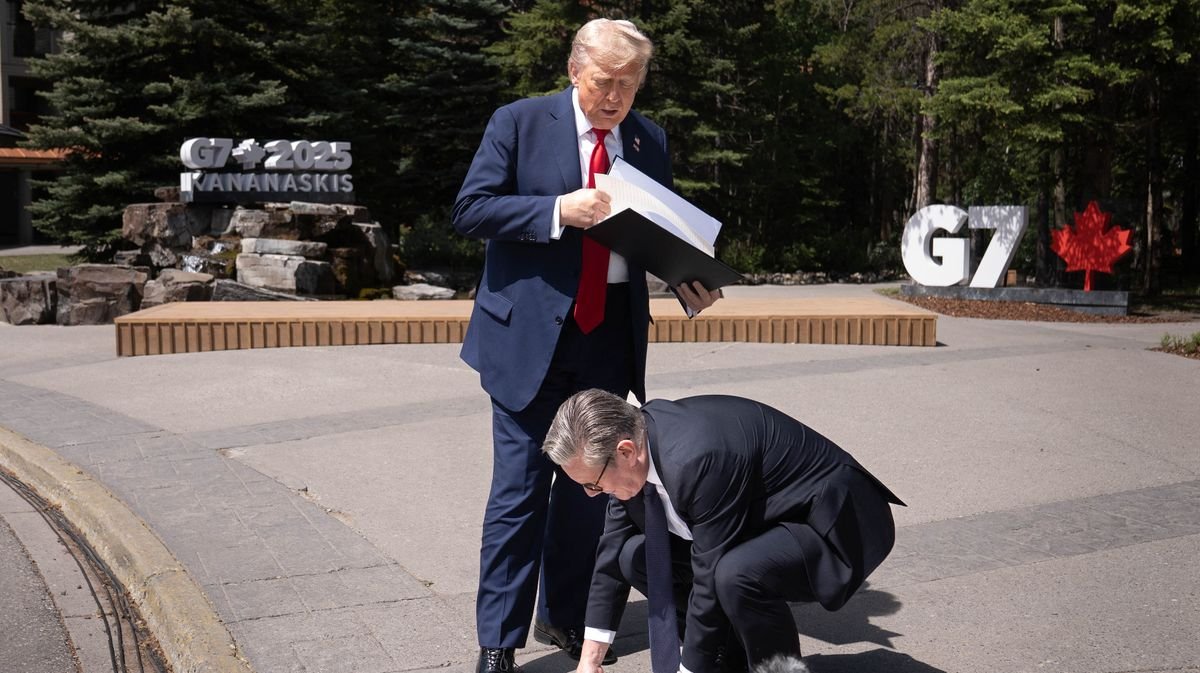

In a surprising turn of events during his second term in office, Donald Trump’s unexpected admiration for Keir Starmer has caught many by surprise. Starmer has stated that they share common ‘family values’ and have developed a strong rapport. He is often viewed as a key intermediary by European leaders, utilizing his influence to communicate messages to Trump effectively.
Most recently, Starmer played a pivotal role in diffusing tensions between Trump and Nato and Denmark over Greenland. Acting as a messenger for Nato’s Mark Rutte and Danish Prime Minister Mette Frederiksen, Starmer conveyed their concerns to Trump, showcasing his ability to influence Trump’s decisions, albeit temporarily.
Although their relationship has had its challenges, with Starmer and Trump’s initial high-stakes meeting drawing attention, the two leaders managed to establish a positive connection. Starmer’s offer of a second state visit from King Charles proved to be a significant gesture that eased the tension during their first encounter.
Despite initial successes in negotiations, such as the “Economic Prosperity Deal,” subsequent disagreements arose, leading to the unraveling of agreements like the Tech Prosperity Deal. Starmer’s impact on Trump’s stance toward Russia and Ukraine remains uncertain, as Trump’s decision-making fluctuates between various influences.
Furthermore, as Trump’s actions, like the invasion of Venezuela, raise concerns, Starmer’s ability to influence Trump’s decisions appears to waver. The ongoing issue of Greenland exemplifies the complexities of their relationship, with differing perspectives on territorial matters.
Looking ahead, uncertainties loom over the future of their alliance, as Trump’s unpredictable behavior and geopolitical decisions continue to test the dynamics between the two leaders. Amidst diplomatic exchanges and formal agreements, the true nature of their relationship and its benefits remain under scrutiny.