

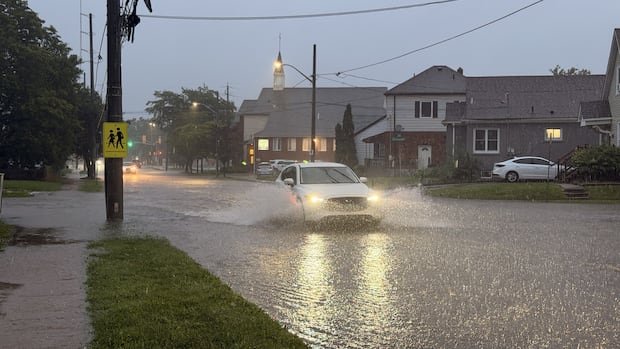

Along the streets of St. Catharines, Ontario, remnants of recent flooding remain visible with discarded items like couches, mattresses, and drywall lining the curbs. This aftermath serves as a stark reminder of the destruction caused by a series of intense storms within a short span of 11 to 12 days, as described by Mayor Mat Siscoe.
Mayor Siscoe explained that while the initial storm was managed relatively well by the stormwater system, subsequent storms overwhelmed the saturated ground, leading to widespread overland flooding and sewer backups in residences. The impact was severe, with instances of sewage entering homes, further exacerbating the damage.
Dave White, owner of White Orchard Farms near St. David’s, shared his experience of strategically safeguarding his garlic crops from the recent flooding by proactively taking measures such as harvesting early and enhancing field drainage. Despite the challenges, White managed to protect his crops this time, unlike a previous incident where heavy rain caused crop losses.
The flooding situation has been overwhelming for White, who also runs a restoration company and has been inundated with calls from homeowners facing flood damages. The repeated nature of the flooding has left many feeling disheartened, with properties that were recently restored now submerged again due to subsequent storms.
Looking ahead, White expressed concerns about worsening flooding trends in the future unless significant investments are made to upgrade the drainage and sewage infrastructure. He highlighted the strain on existing systems, particularly citing the impact of new housing developments.
Mayor Siscoe emphasized that the city’s infrastructure was not equipped to handle the magnitude of the recent storms, which surpassed the design limits of the drainage systems. The excessive rainfall, exceeding levels considered in infrastructure planning, posed significant challenges for the drainage facilities, leading to operational constraints.
Addressing the need for future flood preparedness, Mayor Siscoe stressed the importance of not just replacing pipes but also implementing comprehensive flood resilience initiatives. Plans for redesigning parks to absorb excess rainwater temporarily and enforcing stormwater retention measures in new projects are being explored to mitigate future flooding risks.
However, funding constraints pose a significant challenge in expediting these infrastructure improvements, prompting a call for increased provincial and federal support. Mayor Siscoe acknowledged the prolonged timeline for these critical upgrades but emphasized the necessity of prioritizing infrastructure projects to protect the community’s quality of life.