

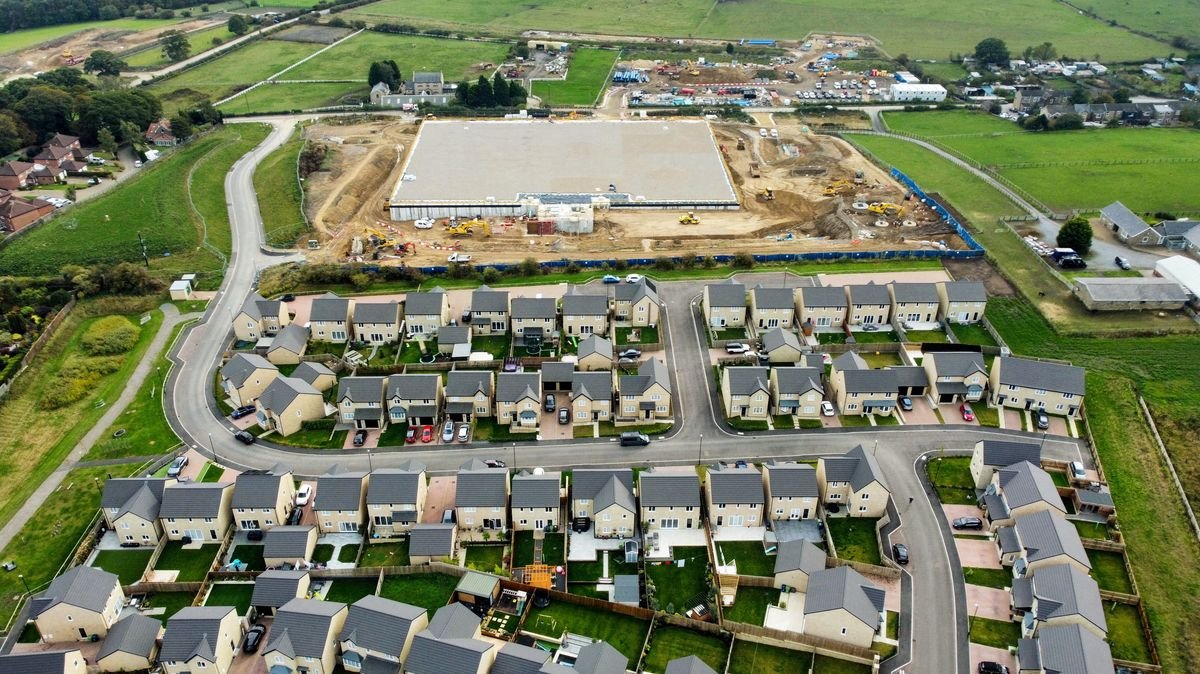

In Springwell Village, Tyne and Wear, residents are expressing anger over the construction of a large indoor reservoir that has been likened to a “Soviet nuclear bunker.” The massive structure, measuring 100m by 75m and standing at 9m tall, is designed to hold 9.5 million gallons of water, which can cater to around 50,000 homes through an extensive network of underground pipes.
Initially planned for completion in the current year, the £26 million Springwell Service Reservoir project has faced delays, pushing its expected finish date to 2026. Despite promises from Northumbrian Water to cover the roof with grass for better integration into the surroundings, aerial images now show the roof covered in 2,400 tonnes of grey gravel, disappointing locals who were expecting a more natural appearance.
Residents in proximity to the reservoir have criticized Northumbrian Water for what they perceive as an “ugly eyesore.” They feel let down by the failure to restore the wildlife corridor to its original condition as pledged. The community voices concerns that the reservoir’s gravel-covered roof, resembling three football pitches, disrupts the natural aesthetics of the area.
Neighborhood complaints extend to the disruption caused by construction activities, with years of inconvenience from heavy machinery and excavation work. Homeowners like Steve Woods, who moved into a new property close to the site just before construction began, express regret over the impact on their daily lives and the aesthetics of the area. They stress the importance of blending the reservoir structure into the natural environment, as initially promised by the water company.
Northumbrian Water defends the decision to opt for a gravel roof instead of grass, citing industry recommendations for maintaining water quality in the reservoir. The company states that the alteration was made to safeguard the reservoir tank’s integrity and not due to cost concerns. They assure residents of ongoing efforts to mitigate the project’s impact and emphasize transparency in communicating changes throughout the development process.