

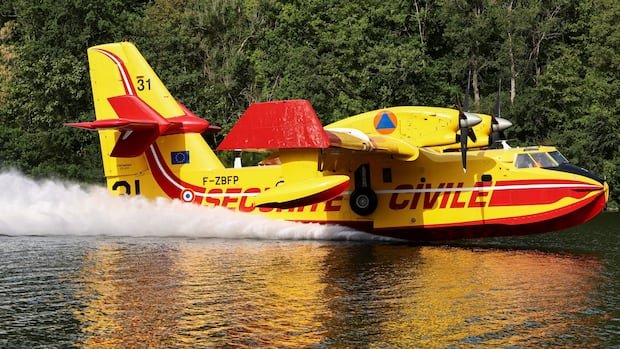

Canada, the United States, and Europe are facing a challenging wildfire season, prompting calls for increased production of the Canadair “Super Scooper” water bombers and urging the federal government to make a bulk purchase of the aircraft. De Havilland, based in Calgary, has decided to restart production of the Canadair following its acquisition of the water bomber program, previously managed by Bombardier until 2015.
These renowned aircraft are meticulously hand-built in Calgary, with components sourced from various locations across the country. The reactivated production line, announced in 2022, is progressing well with the first two aircraft on track for completion and delivery by early 2028. The demand for these planes is high as Canadian premiers and European leaders seek to address shortages and aging fleets.
Originally introduced in the 1960s, the Canadair amphibious firefighting plane was specifically designed for combating extensive fires in Canada’s wilderness. Its distinctive capability to navigate narrow canyons at low altitudes and swiftly scoop up thousands of liters of water from natural sources set it apart from other firefighting aircraft that are often retrofitted for water-carrying purposes.
The latest iteration of the Super Scooper closely resembles past Canadair models, featuring expansive high wings, a 6,100-liter water tank, and the iconic yellow and red color scheme. Recent criticisms from opposition politicians in France and Spain have highlighted the lack of operational Canadairs, emphasizing the need for enhanced readiness in managing extreme weather conditions and wildfires.
De Havilland is under significant pressure to meet the escalating demand for water bombers. The company is contemplating establishing a second production line to augment the existing facilities due to the overwhelming interest in these aircraft. Collaboration between Alberta Premier Danielle Smith, other provincial leaders, and the federal government aims to secure a substantial order from Ottawa, which could potentially trigger the construction of a second production line.
Presently, De Havilland has orders for 38 water bombers, with delivery timelines extending to 2032-2033. The aircraft’s production involves a complex supply chain with the majority of parts sourced locally. The company is exploring the possibility of ramping up production capacity to cater to the global demand for these firefighting aircraft.
Experts like John Gradek from McGill University have highlighted the urgent need for additional production lines to meet the soaring demand for Canadair water bombers worldwide. The threat of foreign competitors entering the market if domestic supply falls short poses a tangible risk to Canadian manufacturing jobs. The federal government is urged to consider bolstering the national fleet of firefighting aircraft to enhance wildfire response capabilities across the country.
A Senate report released in June recommended the establishment of a national fleet of modern firefighting aircraft to address the escalating wildfire crisis in Canada. While aircraft play a crucial role in fire management by containing the spread and supporting ground crews, various challenges such as smoke and rugged terrain can impede their effectiveness. The federal government is committed to enhancing wildfire response capabilities and collaborating with provincial and territorial authorities to mitigate the impacts of increasingly severe wildfire seasons.