

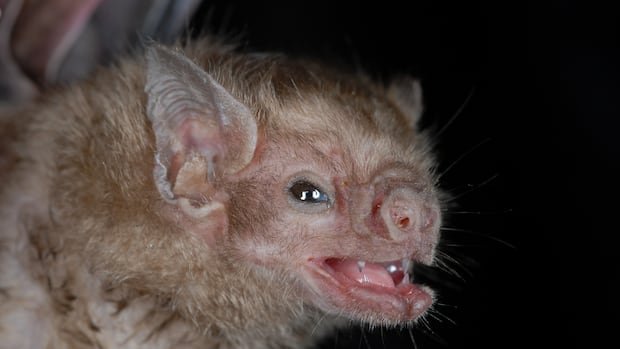

A recent extensive study of bat genomes from all 21 modern bat families, in conjunction with numerous fossil bats, has resolved the long-standing debate on the origins of bats and shed light on the characteristics of early bats. According to a new publication in the journal Nature, the earliest bats likely emerged in Europe approximately 65 million years ago. Sonja Vernes, the paper’s senior author and head of the Bat1K consortium overseeing the research, noted that past discussions among scientists considered Asia, Africa, or North America as potential birthplaces for bats, but the scarcity of fossils hindered definitive conclusions.
Vernes, a professor at the University of St. Andrews in Scotland, emphasized the global dispersal of bats over millions of years due to their flying capabilities. By analyzing genomes from 103 bat species and comparing them with 44 fossil bats, researchers uncovered that ancient bats possessed 26 chromosomes and originated around 65 million years ago, coinciding with the extinction of dinosaurs and the diversification of many mammal species. Echolocation, a vital trait for bats, was observed early in their evolutionary history, as demonstrated by the fossil bat Vielasia, which lived 50 million years ago and exhibited bone structures conducive to echolocation.
Presently, the world hosts 1,500 bat species, representing a significant portion of living mammal diversity. The detailed family tree derived from the study illuminates the relationships among the 21 bat families. The research findings, now publicly accessible worldwide, have piqued interest in leveraging bat genomes to advance human health research. Scientists have long been intrigued by bats’ exceptional longevity, resistance to viral diseases, and unique vocal learning abilities in offspring, which parallel aspects of human development.
The ambitious study involved a global collaboration of 600 researchers, including Canadians like Burton Lim from the Royal Ontario Museum. Lim, a mammal curator, contributed a substantial portion of bat samples for genomic analysis, focusing on species from tropical regions. While acknowledging bats’ negative public perception, Lim highlighted their crucial ecological roles in pollination, seed dispersal, and pest control. The availability of comprehensive bat genome data is anticipated to drive further investigations into the genetic mechanisms underlying distinctive bat traits, such as echolocation.
The study’s broad implications extend to biodiversity conservation efforts, as illustrated by ecologist Christina Davy from Carleton University. Davy emphasized the study’s significance in elucidating the deep evolutionary history of bats and its potential application in guiding conservation strategies for genetically vulnerable bat families. The accessibility of extensive genetic datasets resulting from the study is expected to catalyze diverse research endeavors aimed at understanding bat evolution and addressing critical conservation challenges.