


Almost two years following an unusual fish occurrence at Canada’s primary nuclear power facility that posed a safety challenge to its reactors, recently acquired documents reveal the extraordinary nature of the incident. Experts caution that abnormal ecological conditions are increasingly posing a significant challenge to nuclear plants globally.
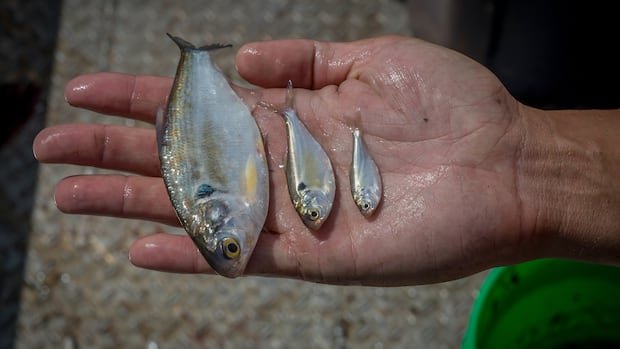
In February 2025, an overwhelming number of gizzard shad fish disrupted the cooling systems at the Bruce Nuclear Generating Station near Tiverton, Ont., leading to the shutdown of one reactor, decreased power output in another, and the appearance of dead fish along Lake Huron’s shoreline for several days.
The obtained federal and provincial records, totaling over 1,200 pages, shed light on how an environmental anomaly involving a small, cold-sensitive fish tested the capabilities of Canada’s largest nuclear power plant in unexpected ways.
Bruce Power, the plant’s operator, declined an interview but later provided a written statement without addressing specific queries from CBC News.
The investigation conducted by Bruce Power identified the incident as “a novel environmental event,” while Canada’s nuclear regulator described it as an unprecedented influx of gizzard shad that overwhelmed the plant’s fish exclusion systems.
A subsequent report in June 2025 concluded that the two fish influxes in February had a significant impact on reactor safety. Despite this, experts like David Novog, a professor specializing in nuclear safety, clarified that while there were operational impacts, there was no actual threat to reactor safety as shutdown protocols were properly executed.
The Canadian Nuclear Safety Commission’s report in April 2026 highlighted the potential severe consequences of the fish die-off incident, which disrupted the cooling systems serving two operational reactors at the plant.
Estimates revealed that millions of gizzard shad congregated near the plant in February 2025, with the severe winter conditions and the fish’s inability to withstand cold water leading to the massive fish kill event.
Efforts to prevent future disruptions include new physical barriers, underwater deterrents, and advanced monitoring systems at Bruce Power, costing nearly $10 million. The enhanced measures aim to anticipate and address emerging risks associated with climate change and to ensure uninterrupted power generation amidst challenging environmental conditions.
The incident underscores the growing need for nuclear plants worldwide to adapt to changing environmental patterns and reinforce their defenses against unforeseen challenges to ensure continuous and safe operation.