

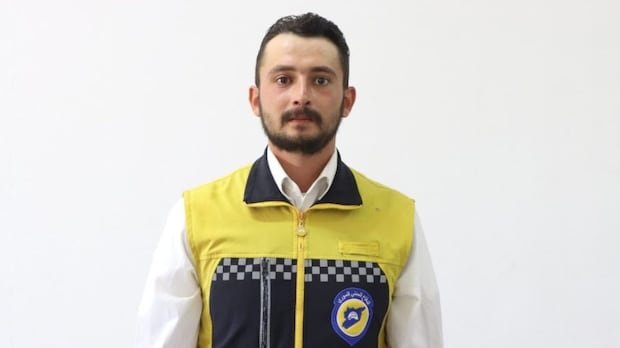

Syrians have demonstrated this week to demand justice for the death of Mohammad Ghamira, who passed away in a hospital after alleged mistreatment by security forces during his detention. This incident occurred less than two years after the new government pledged to eradicate the prevalent arbitrary detentions and abuse that were common under the previous regime.
According to Ghamira’s family, the 29-year-old, a father of two, had hemophilia, a rare genetic disorder that affects blood clotting, making him vulnerable to prolonged bleeding. He spent three days in detention before his release on Aug. 9, after which he was immediately taken to the hospital. Unfortunately, he succumbed to his condition a week later.
The death of Ghamira has become a pivotal test for Syria’s new government to demonstrate its commitment to accountability following the fall of the long-standing Assad regime. His passing led to peaceful protests and sit-ins across the country, shedding light on numerous reports of alleged mistreatment at detention centers since the new administration assumed power.
Fadel Abdulghany, the executive director of the Syrian Network for Human Rights (SNHR), emphasized the need for a comprehensive and judicially supervised system to govern detention practices in Syria’s transitional phase.
Ghamira, a former volunteer with the White Helmets, was detained on suspicion of theft, as reported by the Latakia Internal Security Command. Despite his family’s warnings about his medical condition, he was reportedly subjected to physical abuse while in custody.
After his release, Ghamira died at Latakia University Hospital. The Syria Campaign, a rights group, criticized the internal investigation findings, stating that systemic reforms are essential to prevent future mistreatment in detention facilities.
The government’s promise of accountability in Ghamira’s case has been met with skepticism by rights groups, who argue that abuses persist in detention centers. Syrians for Truth and Justice reported ongoing instances of severe beatings, electric shocks, and deaths in custody at the hands of security and military personnel.
Amid international scrutiny and calls for justice, Syria’s transitional government faces mounting pressure to address systemic issues within its law enforcement and detention systems to prevent further human rights violations.