

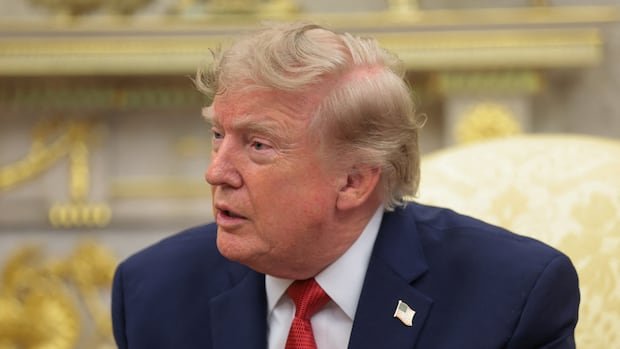

U.S. President Donald Trump made a last-minute announcement on Tuesday that he would temporarily halt the enforcement of 50% tariffs on various Canadian goods for three days, just prior to their scheduled imposition. The president mentioned in an initial online post that the levies were delayed due to the existence of a potential agreement between Canada and the U.S., pending finalization. A subsequent statement from the White House justified the suspension, stating it was in the public interest as Canadian negotiators had shown a willingness to address trade issues raised by the Trump administration.
Canadian Prime Minister Mark Carney responded by characterizing the decision as a postponement to allow for further trade discussions, emphasizing the progress made while acknowledging the remaining work to be done for a stronger domestic economy.
The tariffs, initially set to begin at 12:01 a.m. ET on Wednesday, would have affected a wide range of products valued at over $28 billion. The delay provides additional time for negotiators to strive for an agreement and offers temporary relief to businesses on both sides of the border concerned about the potential negative impact on small enterprises, supply chains, and consumer costs.
While the pause offers a respite, the long-term avoidance of tariffs is uncertain, as Trump did not specify whether a finalized deal would lead to the permanent removal of the levies. Ongoing negotiations have focused on contentious issues such as auto tariffs, with sources indicating lingering disagreements on specific details. Canada and the U.S. have engaged in intense discussions to address trade tensions, aiming to find common ground before the deadline.
The negotiations have been complex, with both parties pushing for concessions on various trade matters. Canada seeks to reduce tariffs on industrial goods like steel and aluminum, while the U.S. advocates for market access and adjustments in the dairy sector. The evolving talks have highlighted the challenges of balancing competing interests to reach a mutually beneficial agreement.
As the deadline approaches, businesses are navigating uncertainties and potential impacts, with some rushing sales to avoid potential tariffs. Former Canadian ambassador Bob Rae emphasized the destabilizing effect of the tariff uncertainty on the Canadian economy, stressing the need for a resilient response to maintain business confidence amid the ongoing trade negotiations.