

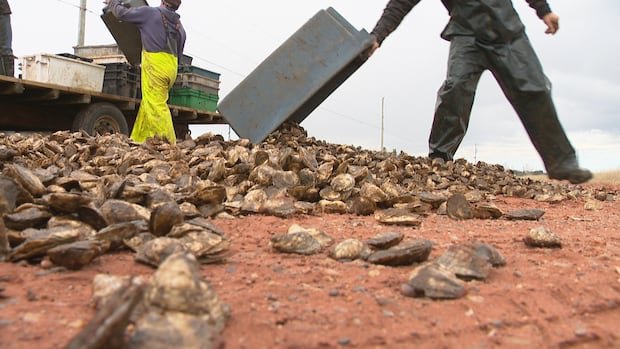


While managing their oyster farm in western P.E.I., Kaila Richard and her husband Bruce Richard reflect on the legacy of Kaila’s late father, who tragically passed away in 2021.
Kaila shares, “Being here, I feel my father’s presence. In moments of error, I can almost hear his voice questioning our actions, and in times of success, I can imagine his pride.” The couple invested significantly in upgrading their farm with modern equipment and extensive labor, but their efforts are now at risk due to the outbreak of two devastating diseases in the region.
The impact of the diseases has resulted in the loss of millions of oysters, creating a devastating scenario for the entire oyster industry in P.E.I. Bruce described the situation as a “massacre,” stating that numerous farmers in their area are experiencing massive losses of up to 90-95% of their oyster stocks.
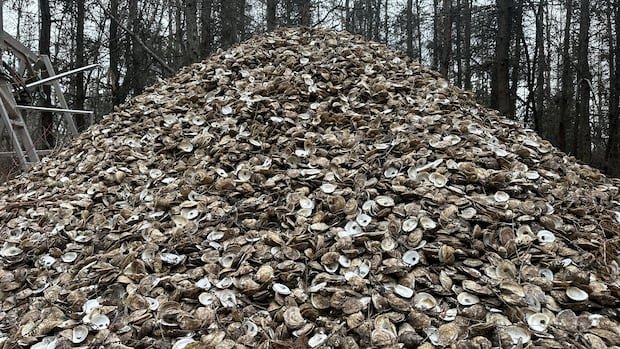
Oyster growers in western P.E.I. face significant challenges as they witness their oyster stocks decimated by diseases. The region grapples with the aftermath of MSX and dermo outbreaks. CBC’s Nancy Russell investigates.
The diseases, known as multinucleate sphere unknown (MSX) and dermo, were first identified in P.E.I. waters in 2024 and 2025, respectively. Although harmless to humans, these parasites have been fatal for oysters, leading to alarming mortality rates reaching 100% for some growers.
Efforts to address the crisis have prompted both provincial and federal governments to introduce support programs, including financial aid, mental health services, and the authorization of disease-resistant oyster seed importation. The hope is that cultivating this specialized seed could replenish oyster populations, although this process requires a minimum of three years for growth, with no guaranteed success.
<p