

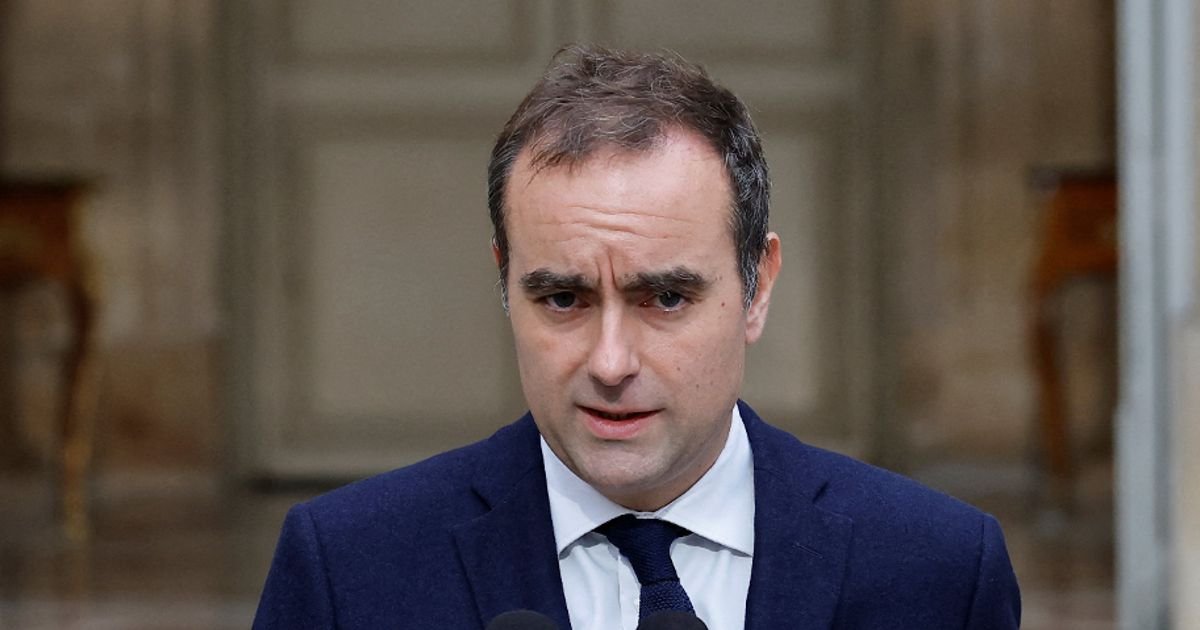

Sebastien Lecornu has been reinstated as Prime Minister by Emmanuel Macron following his recent resignation.
The French President has tasked the PM with reforming the government and presenting a budget to resolve the country’s political stalemate. Lecornu’s reappointment came after extensive negotiations and less than a week after his initial resignation due to internal conflicts within his new government.
France is currently grappling with economic challenges and a growing debt burden. Today’s reappointment is viewed as a critical opportunity for Macron to revitalize his second term, which extends until 2027. With a lack of majority support in the National Assembly, Macron is facing mounting criticism both internally and externally, leaving little room for maneuvering.
Macron’s office issued a brief statement announcing the reappointment, a month after Lecornu’s initial appointment and four days after his resignation. In a social media statement, Lecornu expressed his acceptance of the new role out of a sense of duty. He highlighted his mission to deliver a budget by year-end and address the daily concerns of French citizens.
All members of the new government are required to forgo ambitions of running for president in 2027, according to Lecornu. He emphasized that the new Cabinet would embody renewal and a diverse set of skills, aiming to resolve the ongoing political crisis and stabilize France’s image and interests.
Lecornu’s sudden resignation on Monday, shortly after announcing a new Cabinet that faced opposition from a key coalition partner, triggered calls for Macron’s resignation or the dissolution of parliament. Macron, instead of responding directly, announced his intention to appoint a successor for Lecornu within 48 hours.
Following a two-hour meeting with political party leaders at Macron’s request, uncertainty loomed regarding the next steps. Some leaders cautioned against selecting another prime minister from Macron’s fragile centrist camp, fearing potential rejection by the lower house of Parliament and prolonging the crisis.
The challenges faced by Macron’s successive minority governments over the past year have left France in a state of political paralysis amidst a debt crisis. France’s public debt at the end of the first quarter of 2025 stood at 3.346 trillion euros, equivalent to 114% of the GDP.
Moreover, France’s poverty rate hit 15.4% in 2023, the highest since records began in 1996, raising concerns among financial markets, ratings agencies, and the European Commission. The opposition parties, National Rally and France Unbowed, were excluded from the recent discussions, with diverging views on the necessary actions.
Lecornu suggested the possibility of a working government comprising Macron’s bloc, allies, and parts of the opposition. Seeking compromises to avoid a vote of no confidence, the PM might have to reconsider unpopular policies such as the pension reform, a contentious issue that opposition parties are advocating to revoke.
The ongoing political deadlock traces back to Macron’s decision to dissolve the National Assembly in June 2024, leading to a hung parliament after snap elections. The inability to secure a majority has impeded efforts to address France’s deficit and public debt, unsettling investors and frustrating voters.
With unstable support, Macron’s governments have faced successive crises, collapsing amidst challenges in garnering approval for austerity measures. Lecornu’s swift resignation post-Cabinet announcement underscores the fragility of Macron’s coalition amid deep-seated political and personal rivalries.
Stay informed on UK politics with our daily email briefing delivered to your inbox for free.