


A retired senior detective involved in the case of a British girl who went missing in Australia more than 50 years ago has appealed to the man who once admitted to her murder to come forward and confess to the authorities. This plea coincides with a new search effort to find the remains of three-year-old Cheryl Grimmer.
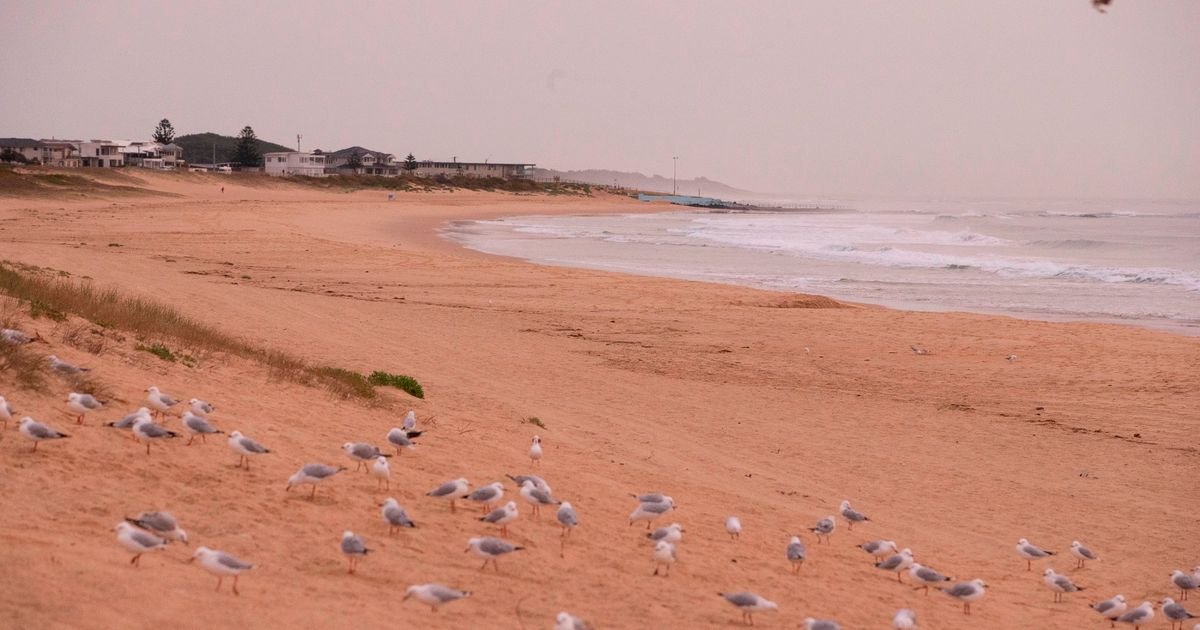
Cheryl disappeared after leaving Fairy Meadow Beach in Wollongong in January 1970, initiating one of Australia’s enduring missing children investigations. The Mirror visited the beach five years ago, covering the ongoing inquiries as a tribute plaque was unveiled to commemorate Cheryl’s disappearance.
In a groundbreaking move, a search is now underway on a piece of land in Wollongong connected to a 1971 confession by an individual known as “Mercury” within police circles.
The person’s identity remains undisclosed due to being a minor of 17 at the time of the alleged incident. Although the confession provided intricate details about the location where the body was left, such as fence lines and tree types, it was initially deemed unreliable, leading to no search efforts at the site.
Detective Senior Constable Frank Sanvitale, who revisited the case, recollected a conversation with “Mercury” confessing his remorse over the incident. Sanvitale encouraged the individual to step forward and disclose the truth, emphasizing the importance of providing closure to Cheryl’s family and finding peace for himself.
Despite the team’s efforts to piece together the confession with new information and subsequent charges of Cheryl’s murder against the individual in 2017, the case collapsed in 2018 due to the Supreme Court ruling the confession as inadmissible.
In 1971, law enforcement could interrogate minors without parental or legal representation, a practice later prohibited, even retroactively to “Mercury’s” case.
The search area, now surrounded by residential properties but previously farmland in 1970, is being scoured for evidence. Volunteers leading the search operation highlighted the effectiveness of their cadaver dogs in locating human remains dating back over half a century.
Ricki Nash, Cheryl’s brother, present at the search site, expressed disappointment that the search had not been conducted earlier, considering the detailed confession provided by “Mercury.” Nash stressed the importance of seeking answers for the family and criticized the delayed actions by authorities.
A New South Wales MP has discussed the option of using parliamentary immunity to reveal the individual’s name and disclose the full confession publicly, a move Nash views as a last resort that could materialize soon.
Chris D’Arcy, president of Search Dogs Sydney, highlighted the significance of the ongoing search, marking the first formal exploration of the location described in Mercury’s confession. Advanced techniques like drone mapping are being utilized to enhance the search process, with cadaver dogs playing a crucial role in uncovering long-term missing persons’ remains.
The community’s remembrance of Cheryl’s tragedy is evident through tributes left at the memorial plaque on the 50th anniversary of her disappearance in 2020. Nash emphasized the family’s right to closure and criticized the authorities for withholding crucial information.
At Reach and throughout our affiliated entities, we and our partners utilize data collected via cookies and other identifiers to enhance user experience, analyze site usage, and deliver personalized advertisements. You have the option to opt out of data sharing or sales by clicking the designated button on the webpage. Your consent to the use of cookies signifies your acceptance of our privacy policy and terms.